HVAC is experiencing a silent revolution in the world market. With the increased environmental pressures on manufacturers, the increased energy expenses, and increased demands on the quality of the product, conventional fuel technologies of joining, are slowly undergoing changes to less damaging and more manageable technologies. Among the major innovations, it is possible to mention the use of the on-site hydrogen in the process of the precise joining of air conditioners during production.
Specifically, the popularity of the use of hydrogen brazing is growing in production facilities that are striving to achieve safer and oxidation free copper joining techniques. Manufacturers are taking this as an industrial hydrogen gas generator that they are directly putting into their assembly lines instead of using stored fuel cylinders. The method facilitates better regulated in-service brazing of air conditioners, particularly in mass-volume settings wherein the integrity of joints is directly proportional to the performance and warranty rates. Hydrogen air conditioning brazing technologies are used to provide cleaner flame chemistry required by modern standards of AC manufacturing.
Since HVAC systems will be smaller, less energy consuming, and environmentally compliant, the joining process will have to change in a similar manner. Systems that use hydrogen are increasingly being seen as alternative and even as an upgrade to existing systems.
Air conditioning brazing is an important process in manufacturing. All the condenser coils, evaporator binds and connections at the compressor are based on powerful, hardy copper joints. Leaks at the size of a microscope can affect the efficiency of the refrigeration and consume more energy and diminish the life of the products.
HVAC systems still use copper due to its thermal conductivity, their resistance to corrosion and even durability. Nevertheless, copper joining needs accurate control of heat and equalized flame chemistry. Application of proper copper brazing gas has a direct influence on the joint penetration, filler metal flow and long-term reliability.
Applications like high-speed production lines, where thin-walled tubing needs to be brazed, need copper tube brazing its metallurgical bonding should be consistent, and the bonding should not be provided through overheating the tubing. Poor flame control may cause oxidation, scaling, and poor joints all of which result in higher rework and rejection.
The operations such as brazing refrigeration lines and brazing copper pipe air conditioning require a steady flame that will not be polluted inside. Integumental oxidation is imperative whether it is the joining of copper to brass fitting or brazing copper to copper.
Finally, system durability and refrigerant retention, as well as reputation of the product in the field are dependent on the quality of brazing.
Many decades on, HVAC manufacturers have been using copper joining, based on LPGs and acetylene as well as propane. Although such traditional fuel gases are common, they have some drawbacks in the contemporary production environment.
To begin with, an oxidizing environment is formed by hydrocarbon fires unless it is adjusted. It causes surface scaling of copper tubing which involves post-braze cleaning and increases the labour expenses. Over-oxidation may also lead to a reduction in the bonding strength of filler metals.
Second, traditional torches are likely to have inconsistent heating profiles. Diffusion of the gaseous pressure and mixing proportions is also likely to cause a bias toward overheating or underheating ,especially in frequent iterations of the operation of the copper brazing machine on semi-automated or automated lines.
Another key issue is safety. The acetylene and LPG cylinders should be kept in a close place, checked frequently, and as per the fire regulations. Both the risks of leakage and explosion require constant checks, which elevate the operational overhead.
These disadvantages in high-volume refrigeration line assembly are translated into:
As the HVAC output grows across the world, producers are pursuing technologies that reduce these risks besides performing effective control in the processes.
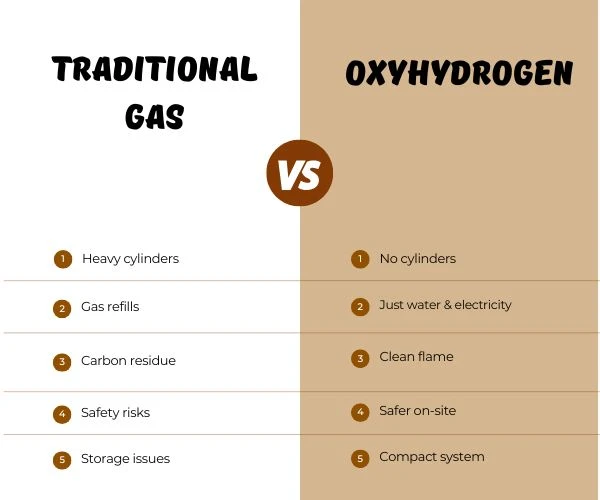
Brazing based on hydrogen-atom initiates a radically novel flame chemistry. Hydrogen fuels, unlike hydrocarbon fuels, add to a reducing atmosphere around the joint because it generates a clean and high-temperature flame. It is the type of environment that is dynamic to reduce copper oxidation during the heat process.
A hydrogen brazing torch creates a stable flame that has a stable thermal focus that is ideal when using a thin copper tubing that is generally used in air conditioners. Carbon-based combustion is eliminated and it minimises the formation of soot and also requires less cleaning after braze.
During hydrogen oxygen brazing, the desired level of oxygen and hydrogen is merged in regulated quantity to create a fire of excellent intensity. This process, also known as oxy-hydrogen brazing, provides a fast, uniform heat, and in automated production, this will help in cutting of production cycle times.
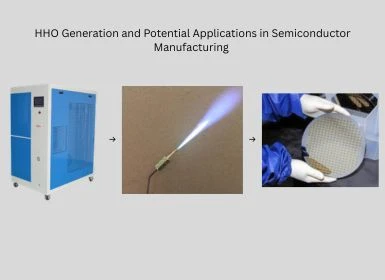
These systems are based on the core of hydrogen brazing 3-ice, which is a technology powered by electrolyzers. Such generators break down water to produce hydrogen and oxygen gases when required. They can also be referred to as HHO or oxy-hydrogen generator because they do not require any stored cylinders.
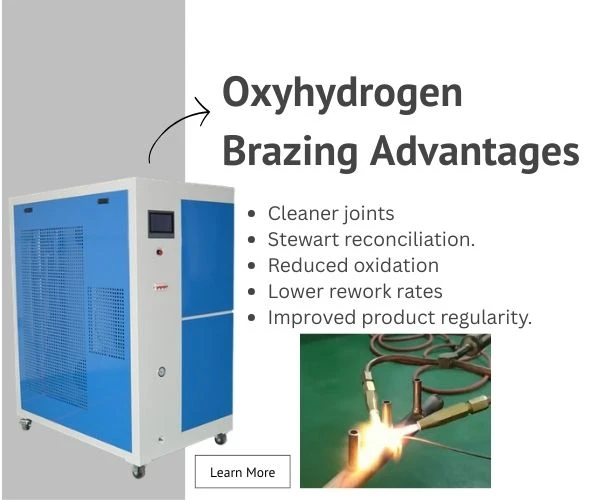
The result is:
Hydrogen flames also provide a great thermal control that helps to minimize thermal distortion in delicate assemblies.
Incorporating Hydrogen generators into HVAC manufacturing lines is changing the efficiency of manufacturing. Facilities do not have to take care of the fuel inventory and logistics of the cylinders; instead, they can depend on the use of the so-called hydrogen generator brazing systems which generate the gas on demand.
An industrial hydrogen gas generator is an electrolyzer that allows an uninterrupted and regulated flow of hydrogen and oxygen by using water. This on-demand concept contributes to a significant improvement in safety because on-demand storage of high-pressure gases is completely removed.
Key advantages include:
In the assembly lines of automated air conditioners, standard flame chemistry guarantees uniformity in the quality of the joints of thousands of daily brazing. Due to its specific control of the hydrogen systems, they can be more easily integrated with robotic brazing arms as well as programmable heating sequences.
The production of hydrogen generators provides the scalability and dependability that manufacturers need as HVAC production is becoming more automated.
Suppose that a mid-sized air conditioner manufacturer has potential recurring problems of oxidation problems and high levels of rework when assembling the refrigerant circuit. Their conventional LPG-based system meant scaling within copper lines, which demanded extra cleaning and checking processes.
The company has reorganized its workflow on air conditioning brazing after replacing the technology to that of the hydrogen generator. The change promptly enhanced the state of surfaces in the course of brazing refrigeration lines, removing any manifested oxidation and decreasing the chances of internal pollution.
In high-speed core copper tube brazing cycle times were reduced since the heating was faster and the concentration of flames was enhanced. The operators complained about the enhancement of flame stability and downsizing of adjustments as manufacturing shifts occurred.
The manufacturer saw: Within six months, the manufacturer noticed:
The switch also made the layout of facilities easier, thus eliminating bulky gas cylinders on the shop floor.
Such practical use shows the direct improvement of operational attributes in the production of HVAC with the help of the hydrogen-based brazing.
Moving to hydrogen-based methods of joining is more than a simple enhancement move, but a strategic change of enabling air conditioning systems to be produced.
Using hydrogen generator brazing will ensure manufacturers have cleaner production process, stronger copper joints and high standards of safety. High-technology, straight, as well as refined, impartial brazing ICE systems, offer uniform flame chemistry, eliminating oxidation and decreasing subsequent braze finish.
Since copper is the main circuit in the refrigerant, micro-control in the process of copper tube brazing becomes even more essential. With hydrogen technology, optimality of metallurgical bonding is guaranteed and high volume production necessities are sustained.
With energy efficiency, environmental responsibility and reliability of the product being the defining factors of competitive advantage, hydrogen brazing machines have a way to go.
To manufacturers of HVAC who want:
Hydrogen generator brazing is not some substitute- this is already quickly becoming the new standard in the manufacturing of air conditioners.