Quartz vacuum sealing has become a major area of concern in contemporary laboratories especially in materials science research, semiconductor development and advanced energy materials. In these applications, irregular researchers may be required to wrap sensitive samples inside quartz tubes or ampoule under vacuum conditions or inert conditions. This guarantees that the materials do not undergo oxidation, moisture retention and other undesirable reactions in the atmosphere that might interfere with experimental findings or deteriorate the material integrity. Be it crystal growth work, thin-film work or messy reactions in high temperatures, the need to have an environment sealed and devoid of any contaminants to ensure accuracy and repeatability.
However, there are certain technical problems when working with quartz glass. The softening point of quartz is very high (approximately 1700℃), and is much more difficult to manipulate than the glass types which are commonly used. In addition, quartz is highly sensitive to contamination, any form of impurities added during sealing of quartz may contaminate the purity of the sample and affect the experimental results. This implies that the source of heat, as well as the surrounding environment in which the heat is sealed have to be very clean and accurately controlled.
Conventional methods of seal, including gas flame, sealed in furnace, etc. cannot meet these rigid conditions very easily. Carbon residues may be brought by gas flames, or the environment caused by gas flames may be oxidizing, and both are not desirable in high-purity applications. Although it is handy with certain applications, furnace sealing fails to provide the flexibility and localized control required when it comes to tube sealing with high precision, particularly in handling of small or delicate samples.
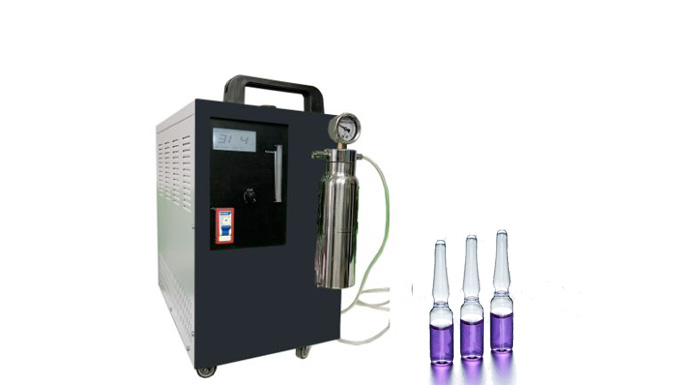
The oxyhydrogen flame generator technology can be of great benefit in this area. Through the electrolysis process of water, the system produces a clean high-temperature flame without the use of external gases as fuels. The resultant flame is not only able to perform the temperatures needed to process the quartz, but also offers a stable and regulated source of heat.
Besides, when it burns, hydrogen and oxygen give out only water vapor as by-product, thus, avoiding the danger of carbon polluting the environment and leaving the sealing environment cleaner. This is especially why oxyhydrogen systems are especially ideal in more delicate laboratory uses where the purity of samples is vital. The capability to provide focused, high temperature heat under very good control enables researchers to obtain reliable and repeatable quartz vacuum seals with a minimum level of thermal stress as well as maximum process efficiency.
Quartz glass does not act like the conventional glass materials like the borosilicate. It softens at a temperature of about 1730 o C and its temperature is much higher, therefore, it cannot be worked using a fine heat flame or simple heating techniques. A very strong, constant, and manageable heat source is necessary to produce a good sealing, one capable of supplying enough heating, and this must neither add impurities, nor make the structure brittle. This renders the processing of quartz quite technical as well as the process conditions being very sensitive.
The problems are even critical in the laboratory setting since the materials involved may either be very reactive, high-purity, or very precious. A major issue is that of upholding vacuum integrity in the sealing process. With the quartz tube being placed under high heat to cool the material, a small break in technique or temperature could cause micro-leaks to impair the vacuum and alter the results of the experiment.
Contamination is also another significant problem. Conventional heating, and those that utilize hydrocarbon fuels in particular, have the potential of introducing carbon soot or trace metal elements. Even in sensitive applications like semiconductor research or advanced material synthesis contamination even in minute amounts is capable of changing the data or interfering with the sample quality. As such, it is necessary to have clean and controlled sealing environment.
Working with the quartz is also prone to thermal shock. Quick or irregular heating may produce harmful internal stress in the substance causing cracks or structural breakdown. This is especially questionable when the accordance of thin-walled tubes or ampoules is at the stake, where even the slightest variations of the temperature can result in the break. This risk needs to be reduced by using controlled heating and cooling.
Another problem in the laboratory would be consistency of operators. The manual methods of sealing may also require the skill and experience of the operator. The inconsistency in the quality of sealing may occur as a result of variations in flame control, duration of heating and handling, which can all influence reproducibility an indispensable factor of scientific research.
Lastly, there is the logic of air-sensitive material which complicates the whole process further. Most experiments are carried out using substances that are easily reactive to oxygen or moisture. The materials should also be sealed during the process which makes it necessary to have strict time regulation, good surroundings, and the use of effective sealing techniques to make sure they are not exposed to the atmospheric factors.
Through the combination of these, quartz sealing is an incredibly specialized process that requires sophisticated equipment, expertise, and good precision to deliver stable and consistent results.
 |  |  |  |
| cracked quartz | gas cylinders | soot contamination | unstable flame |
Most of the laboratories continue using the traditional heating technologies that create both operational and quality restrictions.
| Traditional Method | Typical Limitations |
| LPG or acetylene flame | Carbon contamination and unstable combustion |
| Hydrogen gas cylinders | Storage risks and gas management complexity |
| Manual torch sealing | Operator-dependent quality variations |
| Furnace sealing | Slow heating and poor process flexibility |
To improve the purification and sealing of products, the labs are moving towards the cleaner and manageable sealing techniques as the accuracy of research becomes tough.
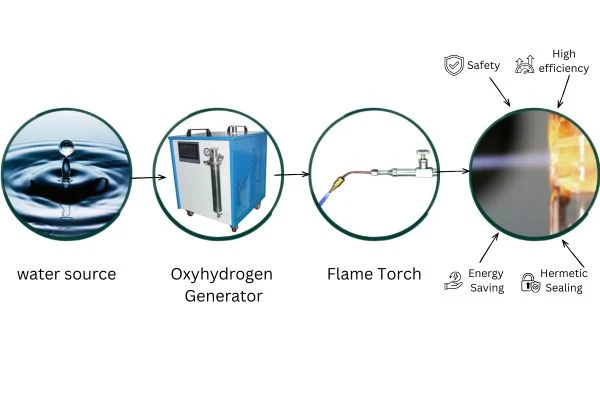
Oxyhydrogen flame system is grounded on a totally distinct principle contrary to the traditional fuel-based torches. It does not use stored gases, such as acetylene, or LPG to obtain hydrogen and oxygen in the process, it utilizes direct electrolysis to make them. The process separates the molecules of water into their elemental gases which are transferred instantaneously into the torch. The nature of demand-driven production also means that there is no requirement of storage cylinders and this saves both logistical complexities and safety hazards of large-pressure gas operations.
When ignited up, the hydrogen protons and oxygen are fused to create a high energy flame that has temperatures of up to about 2800 0 C. This temperature is adequate for processing hard melting materials including quartz. More to the point, the flame is very controllable and can be adjusted to provide the localized heat precisely required to perform the different tasks that need sealing in laboratory settings.
The main benefit of this system is the clean combustion. Hydrogen and oxygen combustion results in water vapor as the only by-product, i.e., no carbon emissions, no soot, no metallic contaminants are added to the process. This is especially critical in use cases where quartz glass is used as any trace impurities may affect the integrity of the sample or cause interference with the results of the experiment.
Due to the purity of the environment, the oxyhydrogen technology could be associated particularly well with the processing of the quartz glass and the sealing of it in a vacuum. It enables the researcher to retain high purity conditions and attain temperatures between which they are capable of closing the cans appropriately. Also, the stable and constant output of fire makes it repeatable and that is extremely important in scientific experiments as well as precise methods of manufacturing.
Oxyhydrogen flame sealing has a variety of essential benefits compared to standard gas-based systems, directly resolving the shortcomings of the traditional approaches, particularly in high precision laboratory and semiconductor applications.
One of the most important benefits is the clean nature of the flame. As the process of burning hydrogen and oxygen does not yield any carbon, no soot or carbon is left and no hydrocarbon pollution. This is so that quartz surfaces do not have any impurities when they are sealed which is vital to experiments and any other procedure where the slightest impurity can influence the outcome.
That system also generates a steady and strongly focused high-temperature flame, and it is able to reach temperatures necessary to properly soften quartz. Contrary to the traditional types of fires that may vary or exhibit an uneven heat distribution, oxyhydrogen fires allow more accurate thermo regulation. This gives the operators the ability to heat the required parts only where necessary and enhances accuracy in the sealing process and minimizes chances of damaging the nearby areas.
The other important benefit is the decreased risk of oxidation. The hydrogen fire makes a slightly reducing ambiance that prevents the oxidation of delicate materials exquisitely metals like copper during heating. It comes in handy especially in those applications that deal with electrical parts or purity materials.
It also increases consistency and repeatability to a large extent. The result is that due to the on-demand generation of the gas and the stability in the features of the flame, operators are able to create consistent sealing measurements across a number of samples. This ensures reduced variability, minimization of defects, and general reliability of the process- which is a very critical need both in research and production.
Safety wise oxyhydrogen system does not require the storage and handling of pressurized gas cylinders. This highly minimizes the risks by leaks, explosions and transportation. Also, the production of the gas is only done on-demand thus the build-up of the presence of the combustible gases within the workspace is reduced, therefore, making the operations even more safe.
The amount of gas delivered on a constant basis and on demand by water also makes a workflow management easier. Cylinder replacement has no downtime, they are not reliant on external gas suppliers, and there will be no halting of important processes. This enhances efficiency and incorporates a better running in the laboratories as well as the industrial settings.
A combination of these characteristics can help laboratories and manufacturers to attain the high levels of reliability of vacuum sealing results and makes the operation of the laboratory or manufacturer ease of use, and help in making maintenance voluntarily more complex and safety management in the whole process easier.
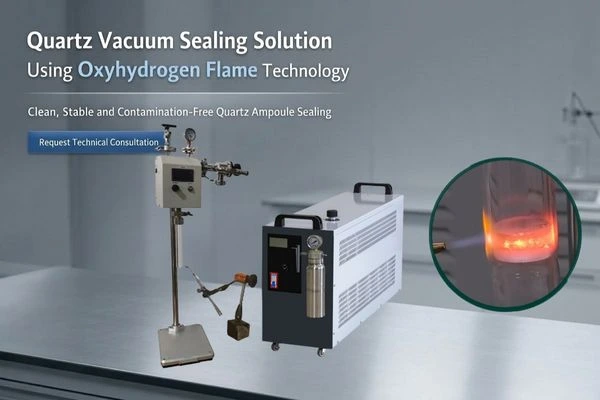
A contemporary quartz vacuum sealing system is not an isolated unit that is a machine but a combined system incorporating gas generation, heating, mechanical rotation and vacuum processing.
Oxyhydrogen Generator + Quartz Ampoule Rotary Sealing System + Vacuum Pump + and Sealed Quartz Ampoule.
Oxyhydrogen Flame Generator: Produces hydrogen and oxygen gases by a process called electrolysis and thus it does not need to be supplied with external gases.
Precision Flame Torch: Generate a localizable high temperature, narrow beam flame that is appropriate in localized quartz heating and necking processes.
Rotary Sealing System: Heats the quartz tube in a uniform fashion, enhancing sealing uniformity and integrity.
Vacuum Integration System: Seals samples under controlled vacuum to guarantee purity.
These elements combined together would enable the laboratories to standardize the quarantine procedure in respect of the sealing of quartz and reduce operator diversity.
The oxyhydrogen solution facilitates a very controlled and fluid laboratory sealing workflow, and it is thus more apt in precision applications with regard to quartz tubes and ampoules.
This starts with good preparation of the quartz tube. The surface is completely washed to eliminate dusts, greases or microscopic substances that might affect the quality of sealing, or undermine purity of samples. After cleaning, the sample material is placed into the tube under the suitable handling conditions- particularly in the case of air sensitive or highly pure materials. A tube is then connected to a vacuum system and the air and moisture are removed to attain the required vacuum or controlled atmosphere.
Once the necessary vacuum has been achieved, the sealing stage is started. The oxyhydrogen flame is applied been at the desired point of the sealing and the quartz tube is controlled throughout its rotation at an equal rate. This rotation assures equal heat distribution when moving around the tube circumference to avoid focal over heating and minimise the danger of structural stress. The high temperature heat is maintained at a controllable level and gradually softens the quartz to enable the operator to make accurate necking and closure. The flame is free and not contaminated by carbon, and hence the sealing process imparts no impurities into the system.
Control that the operator exerts on the input of the heat is one of the most important benefits at this point. The oxyhydrogen flame is fine adjustable and allows one to soften over a period rather than bluflare bursts. This will prevent the formation of bubbles, uneven walls, or weak seals, which are common. What remains is a seamless finish with no bubbles that continues both the integrity of the quartz and the interior environment.
The ampoule is then left to cool naturally under laboratory conditions after the sealing has been done. Cooling should be done gradually to reduce thermal strain and cracking. Due to the uniform and well-regulated heating process, the sealed tube maintains the structural integrity and vacuum integrity following the de-heating.
In general, such an approach is a more precise and consistent workflow than the conventional manual gas flame. It lowers the dependency of the operators, decreases the number of defects, and the success rates of sealing are significantly elevated, which is why it is a perfect fit in the laboratories that need high accuracy and reliability.
Oxyhydrogen quartz seals have been very popular in research laboratories that deal with:
In the academic field, repeatable sealing performance is beneficial in terms of long-term consistency of experiments and safety of operations on the students.
Quartz vacuum sealing is significant in:
This solution continues to be favored by many organizations due to numerous critical.
The success of a sealing solution is not considered in terms of the equipment specifications in advanced laboratory and semiconductor facilities, but on the level of consistency, reliability, and quality of the obtained results. Some of the outcomes that are emphasized by researchers and engineers include seal integrity, contamination control and repeatability of the process. Here, the consideration of oxyhydrogen sealing systems has become a performance-oriented solution, and not an equipment.
The oxyhydrogen vacuum sealing system provides stable and reproducible quality of the vacation sealing, which is essential in the case of the experiment where the same conditions are needed in the multiple samples. This makes it repeatable and creates a more reliable experimental variance and reliability in the research results, especially in high-purity material experiments or reactive reactions.
The other significant benefit is the environment that is contamination-free in the flame. The fact that the water vapor is the only result of the combustion makes the existence of carbon deposits or otherwise unwanted chemical residues non-excusable. This makes the internal environment of the sealed quartz tube pure and is crucial to semiconductor processes and also in advanced material studies.
Another aspect that the system minimizes is operator skill. The conventional modes of sealing are sometimes very dependent on human skills and thus, different operators tend to give different results. With the use of oxygenhydrogen systems, the flame is more controlled and stable and hence the process becomes easier to standardize and less probable to cause human error.
Safety wise, the technology will provide a better laboratory safety environment. The system will reduce risks of gas leakage, storage and handling since the stored gas cylinders are eliminated and the necessary gas is produced on-demand only when needed.
Another important advantage is flexibility. The system is compatible with a range of different quartz tube diameters and wall thicknesses, which enables a wide range of laboratory applications with the system, such as small scale research, to more challenging experimental configurations.
Besides, it lowers operating and gas handling expenses that are long run in nature in laboratories. This means that the water as input factor eradicates reoccurring costliness relating to fuel gas purchase, storage, and transportation thus making the system more cost effective in the long run.
All these benefits make oxyhydrogen flame technology one of the desirable tools in the contemporary research setting, where situational direction, security, and productivity are prioritized.
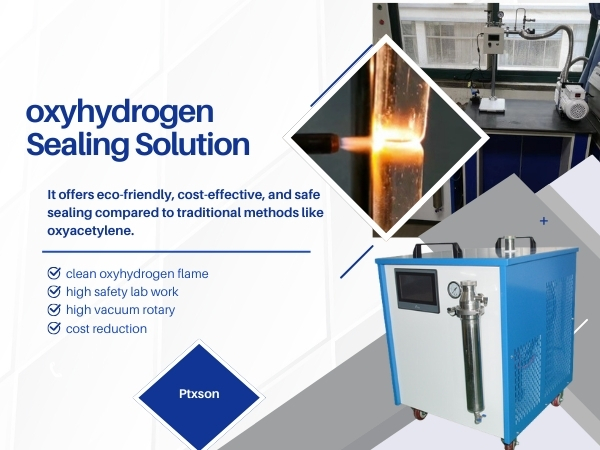
clean oxyhydrogen flame sealing process to replace oxyacetylene flame
Ptxson also provides oxydynamic sealing products which have been programmed to the needs of laboratory and research. Instead of offering a standardized piece of equipment, the emphasis is made on offering systems that fit the practical laboratory operation and performance necessities.
Ptxson has one of the most important assets, namely, its expertise specialization in the sphere of hydrogen flame technology. This profound technical understanding can result in the creation of systems exhibiting predictable, dependable and clean flame characteristics designed to address sealing of quartz.
The solutions are also customizable, whereby the labs can customize their systems depending on their requirements. Ptxson designs can be tailored to fit into various operating configurations whether it is in tube size, the frequency in which it should be sealed or even integrating it with the already in place vacuum systems.
The other significant benefit is the stable gas generation technology, which maintains the same performance of the flame at all times during the sealing process. This stability is essential in ensuring homogeneous results and reduced variability of processes.
Ptxson also offers engineering assistance with optimization of the process so that the laboratories are able to perfect the methods of sealing and enhance their efficiency as well. This is with instructions on the temperature settings, sealing settings and integration of workflows.
Having experience with with both global research laboratories and industrial users, Ptxson can offer practical understanding of a variety of applications, both academic research and high quality industrial processes. This experience is transferred to solutions that are technically strong and easy to use.
Instead of providing single machines, Ptxson aims at providing the complete application-based sealing solutions to meet the scope of both laboratory needs, i.e. equipment selection, and process optimization.
Each laboratory has special needs in sealing and it is hardly effective when a single size fits all. The dimensions of quartz tube, sensitivity of the materials, degree of vacuum that is necessary, and frequency of production are all critical in nature to decide on the best sealing solution.
The latter can be explained by the example of the thin-walled tubes that can easily be damaged by thermal stress and therefore require a very high level of control in terms of heating, or more thicker tubes that need a lot of ऊर्जा and processing time. Equally, materials that are reactive to air might need increasing sealing time and tightening of contamination measures
Ptxson engineering team is closely dealing with laboratories in order to consider these parameters in detail. This involves evaluating the specification of the quartz tube, compatibility of the vacuum system, and evaluating the specifications of the sealing process to provide optimal performance.
With the approach of consultation, the team will be able to propose a solution that would be precise, efficient, and, at the same time, safe. Not only this is helpful in sealing results but increases the overall productivity of workflow.
Laboratories are urged to get in touch with the technical team in order to negotiate on their application. With the help of this partnership, customers will be able to obtain a tailored quartz vacuum sealing system that suits their research interests and business requirements.