The demand to come up with smaller, hotter, and more efficient components in the fast paced and advanced manufacturing environment is unforgiving. The most important, though unrecognized, participant in this technological race is the high purity hydrogen. The increasing need to have a uniform, ultra pure supply of this gas, whether it is the pristine conditions of the semiconductor manufacturing plants or the strictness of the requirements of analytical chemistry, is redefining infrastructure. Even short term disruptions or impurities in the supply of hydrogen can destroy one or two millions of dollars of product or even years of research data of lab hydrogen generators.
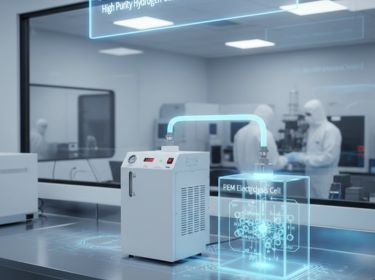
The industry is shifting to on-site solutions to satisfy these high standards by foregoing delivered gas in favor of it. The advanced hydrogen generators, especially by use of Proton Exchange Membrane (PEM) technology, provide an advanced alternative to the traditional cylinders. The new model of solutions such as the 3000ml PEM hydrogen generator and other high purity hydrogen generator models are formulating a new benchmark of reliability. Production of hydrogen in semiconductor manufacturing directly where it is needed can guarantee the molecular accuracy of next-generation innovation.
Recent history has been marked by hundreds of intricate processes that a silicon chip goes through on its way to a high performance processor with many processes depending on the chemical properties of hydrogen being unique. Hydrogen is extensively used in semiconductor wafer manufacturing process as it is used in diffusion and annealing to passivate surface states and heal crystal damage. Moreover, epitaxial growth, or the layer of the crystal, is performed in the atmosphere of hydrogen to provide the uniformity and avoid oxidation.
Some of the most important ones are perhaps the cleaning and etching high-purity hydrogen for wafer cleaning and etching. With the decrease in the size of features on microchips down to the nanometer level, even microscopic contaminants can result in fatal defects. Hydrogen is a scavenger, which reacts with and eliminates oxides and carbon residues of the wafer surface without destroying silicon beneath. As a result, the availability of pure grade of hydrogen semiconductor gas of high quality is not merely an accessory; it is essential raw material of producing flaws free wafer surfaces and high yield rates.
These issues are applicable to large fabs and small research organizations. The higher the price of delivered gas and the lower the toleration of impurities, the higher is the contrast between the hydrogen purity in generator systems and bulk supply. Storage-based facilities are prone to pressure variations and end-of-tank impurities that may cause an inconvenience to delicate hydrogen used in workflows of hydrogen for water processing. The industry is also getting to appreciate the fact that the accumulation of huge volumes of explosive gas is a liability at the cost of which it can be done without.
The solution of these logistical and purity problems can be found at on-demand generators, which generate gas only when it is required. A typical modern electrolysis hydrogen generator works based on either PEM (Proton Exchange Membrane) or SPE (Solid Polymer Electrolyte) technology. In comparison to the older alkaline systems, high purity hydrogen gas pem electrolysis has a solid polymer membrane to separate the deionized water into hydrogen and oxygen in a tidy, secure, and caustic-free way.
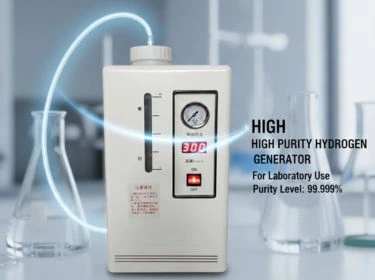
They are marvelous systems of engineering, with digital controls, that include automatic purity tracking and leakage. Specifically, 3000ml PEM hydrogen generator is planned to provide high flows that can be used in a fab facility yet have high purity levels. Transformation of hydrogen from water generator system to a digital appliance enables the facilities to have accurate control of the supply of gas. High purity hydrogen gas generators offer a degree of consistency that bulk supply can not even compare with whether it is in a large-scale industrial or a precision lab hydrogen generator.
There are short-run operational benefits associated with the transition to on-site generation. First, there is the assurance of an on-demand and 24/7 hydrogen supply time that does not create downtime due to the replacement of the cylinders or logistics delays. In the case of Hydrogen gas generators in semiconductor fabs, it is an important continuity to sustain throughput. It is also important the consistent hydrogen purity in generator; these systems regularly provide gas at very high levels (>99.999% purity) which is very important to the state-of-the-art wafer fabrication and ultra-sensitive experiments where even parts-per-billion contaminants are unacceptable.
There is also great improvement in safety. The overall quantity of volatile gas is kept to a very low level to avoid explosive risk of cylinder storage, by generating hydrogen gas lab side or fab side only on demand, and avoiding keeping a large store of flammable gas. The environment is more secured by real-time leak and pressure protection chips. Lastly, there are environmental advantages; transporting gas to a hydrogen lab model will decrease the carbon footprint of the gas transport and there is also the potential to use renewable energy to drive the electrolysis, resulting in a sustainable water-to-hydrogen closed loop. Comparing the purity of the hydrogen in the outputs of generators with the discharged gas, the benefit on-site is evident.
High-purity hydrogen diversity is applicable in different demanding areas. The gas is essential in the manufacturing process workflows of semiconductor wafer manufacturing process in Extreme Ultraviolet (EUV) lithography and cleaning. High-purity hydrogen for wafer cleaning and etching is directly linked to the number of functional chips obtained on a single wafer. It also forms an effective drying of native oxides and prepares the surface to subsequent deposition steps which is required in LSI fabrication to maintain electrical integrity.
These generators are the workhorses on the fab floor besides in the analytical laboratories. An alternative to helium, a hydrogen generator for gc carrier gas ( Gas Chromatography ) is safer, less expensive and time-consuming. It provides steady retention times and consistency of the baseline of analytic processes and Quality Assurance / Quality Control (QA/QC) workflows. The high purity hydrogen gas generator is invaluable whether it is compound semiconductor research reactors or a usual chromatography, where the hydrogen that is to be processed and analyzed on the wafer is always available and of the utmost purity.
The choice of an appropriate generator depends upon a keen evaluation of flow rate necessities, the consistency of purity and safety mechanisms. Such characteristics as microprocessor control to self-diagnose and strong service life are critical characteristics to consider. PEM technology has remained the industry gold standard due to its rapid response to change in demand and the fact that it is safe. One of the best examples of such engineering is the high purity hydrogen generator that also has a small footprint but balanced performance.
Facility managers have to take into account the sum total load when incorporating these units into the existing infrastructure. The size of an electrolysis hydrogen generator should not only be of normal size, but of peak size. Moreover, the reliability is crucial; the generator should give high purity hydrogen and not have to shut down frequently to maintain it. A comparison between hydrogen gas laboratory preparation requirements and industrial fab requirements will be used to determine which of a centralized unit or a distributed fleet of generators will be the most efficient solution to the problem.
The proper installation and a regular maintenance of a PEM hydrogen generator is the key to its successful integration. The unit should be placed somewhere that is well ventilated but since the storage volume is low then this is not as important as is the case with cylinders. Water quality is the most significant determinant of the longevity; high grade deionized water will be used to avoid scaling and destruction of the PEM cell. Regular inspections must incorporate verification of alarm system to verify existence of safety measures.
The cost of maintaining such systems is usually low-endurance relative to the maintenance of contracts that involve the management of cylinders. Usually it will be monitoring the electrolytes (where relevant to the particular tech) or water supplies and following the service schedules on filters and desiccants. Digital monitoring will enable suppliers to provide remote assistance, to trouble-shoot the problems before they affect the operations. The more the adoption, the more the positive feedback will pay off and make it known that a lab hydrogen generator or industrial hydrogen generators are cost-effective in terms of their uptimes and administrative overheads.
With the hydrogen semiconductor industry trying to make its operations less harmful to the environment, the on-site generation will continue to increase in importance. The future of the green fab depends on the ability to decouple with the fossil-fuel-based hydrogen transported with the help of diesel trucks. Rather, on-site electrolysis using renewable energy sources will become the trend in hydrogen semiconductor production.
The change facilitates the growth of advanced manufacturing to areas where the bulk gas supply chains are fragile or absent. Ultra-pure hydrogen generators are making high purity hydrogen research software more accessible, allowing laboratories and fabs and across the globe to be at the same quality level as large technological centers. The future of hydrogen lab is one that is independent, sustainable and efficient.
The shift towards on-site Hydrogen production is not merely a logistical convenience; it is a strategic necessity of the contemporary manufacturing and research. Through the systems, the adoption allows the facilities to have greater control over their supply chain, improve the safety of the personnel, and provide high purity hydrogen gas generator output needed to achieve the level of precision seen in the atomic level. Hydrogen semiconductor technologies are the keys to the future-proof operations due to the productivity gains and sustainability benefits associated with them.
We urge research labs and fabrication plants to no longer be restricted by bulk gas and see the newest technology of PEM. Go to our product pages, the 3000ml PEM hydrogen generator and the high purity hydrogen gas generator to find out how a dedicated lab hydrogen generator will propel your level of operation now.