Hydrogen supply for gas chromatography (GC) is still one of the most popular analytical methods in use in pharmaceutical, environmental, food safety and petrochemical industries and laboratories, as well as research centers. From trace contaminant analysis to pharmaceutical quality testing to hydrocarbon profiling, a reliable and stable source of hydrogen for gas chromatography is essential to the accuracy of the analysis, instrument uptime, and laboratory productivity.
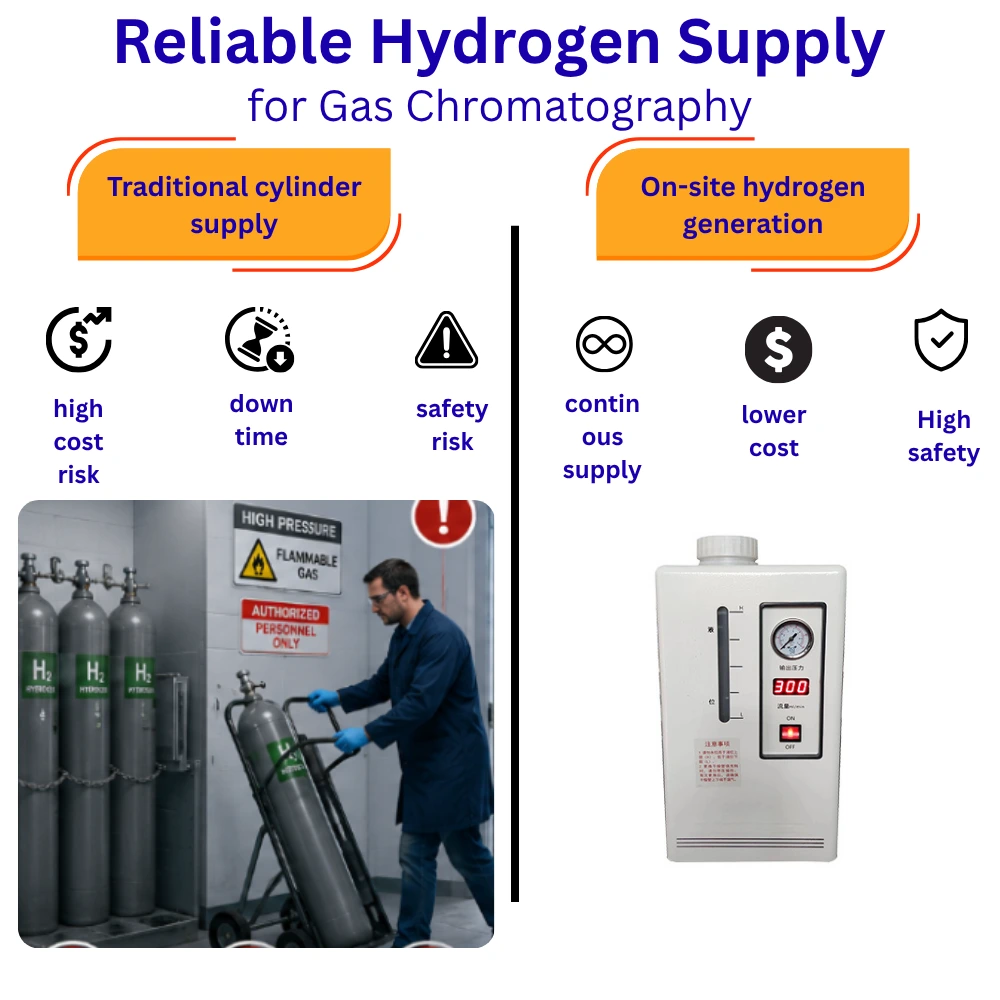
Compressed gas cylinders have been traditionally used to meet the safe hydrogen supply solution for gas chromatography. But the rising price of the gas, transport issues and worries over the availability of helium have led laboratories to consider other options. In the modern era many facilities are using hydrogen generation on their own site for GC as a modern and efficient way of running their lab.
A properly designed lab gas chromatography or laboratory hydrogen supply solution can deliver stabile gas purity, enhance operational continuity, and facilitate a safer lab environment and decrease reliance on outside GC analytical gas supply.
Rising Costs of Gas Cylinders
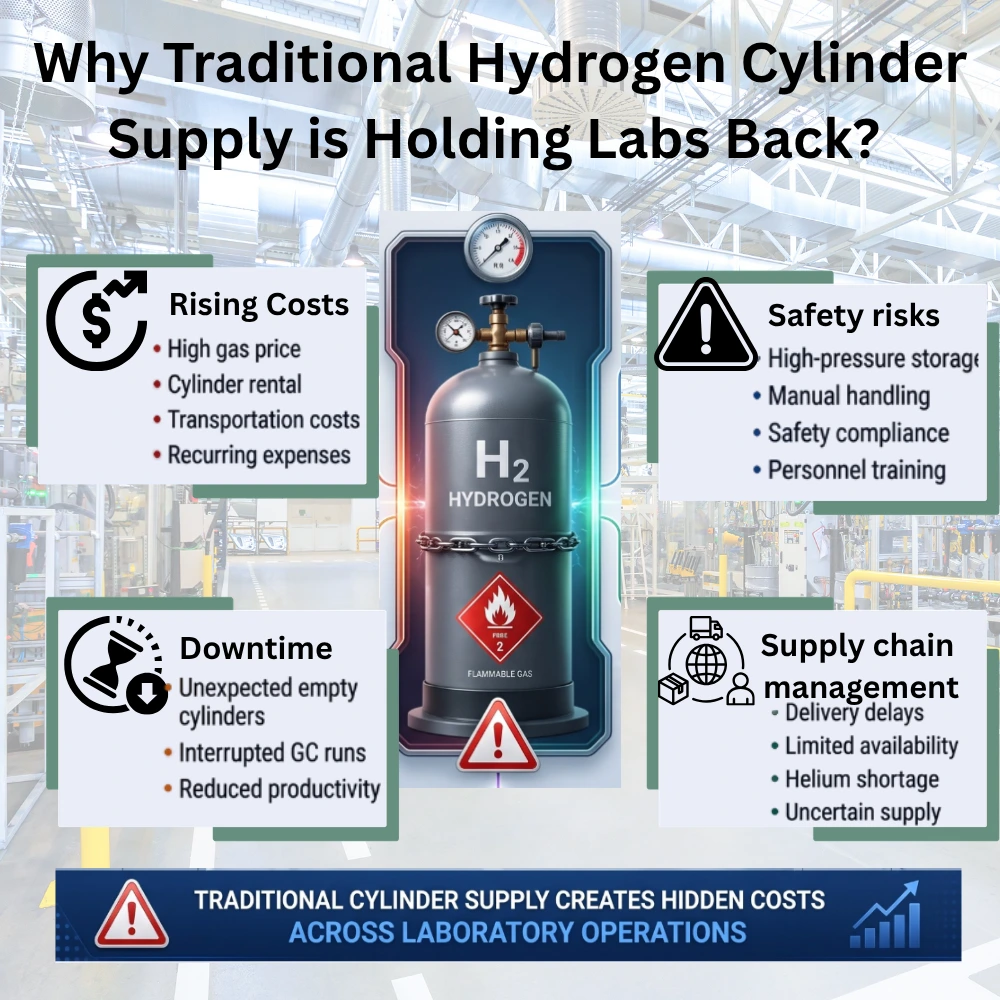
Conventional gas cylinder supply is one of the major concerns that are faced by the analytical laboratories because of the increasing cost. Gases, gas transportation, gas cylinder rental and delivery costs are some recurring expenses that laboratories may have. These costs can add up to be substantial for facilities with multiple instruments.
Delays and disruptions in the supply chain can also make lab operations more complex, especially for those labs that need on-demand analytical gases. This has driven interest in more sustainable systems for the generation of gases in the lab, with a particular focus on the production of hydrogen on the site.
The potential downtime of instruments
When cylinders run out unexpectedly, there can be costly disruptions of laboratory work. When gas runs out during critical analytical runs it can lead to delayed sample processing, interrupted quality control processes, and decreased instrument productivity.
The drawback of manual cylinder replacement schedules is that it is not always possible to keep the laboratory operating without having to rely on the uncertainty of a hydrogen cylinder supply.The problem with manual cylinder replacement schedules is that it is not always possible to keep the laboratory operating without a hydrogen cylinder supply.
Laboratory Safety Concerns
The safety implications brought by the traditional cylinder-based gas storage are additional in laboratories. Operating high pressure cylinders involves careful operating procedures, training of the personnel and adherence to laboratory safety regulations.
The search for laboratory hydrogen supply solution that enable a safe gas chromatography hydrogen supply and allow for continuous delivery of hydrogen has begun at many facilities. The method helps to ensure a more secure laboratory gas management environment and ease compliance.
Due to its physical properties, hydrogen has been the subject of increasing interest as a hydrogen carrier gas for GC applications. Hydrogen possesses a high diffusion coefficient and low viscosity as compared to other gases, enabling faster chromatographic separations and higher analytical throughput.
Hydrogen can be used for increased instrument productivity and faster analysis times, and is a hot option for many labs choosing a carrier gas for gas chromatography. Consequently, hydrogen is still being accepted as a very good solution for use as a carrier gas for GC.
Hydrogen gas is used extensively in hydrogen fuel gas for GC as the carrier gas for detector systems in hydrogen carrier gas for GC systems. Hydrogen is needed for some common hydrogen for flame ionization detector technologies, such as:
One of the most frequent applications of hydrogen gas chromatography applications in the analytical laboratory in the world is hydrogen application in hydrogen for GC-FID. To obtain accurate and reproducible analytical results, reliable hydrogen for the flame ionization and hydrogen for flame ionization detector is essential.
Hydrogen is widely used in modern analytical laboratories in various industries. Hydrogen is applied to pharmaceutical laboratories for drug development and quality assurance program. Hydrogen is used in water testing and pollutant monitoring activities at environmental laboratories. Hydrogen is used in food safety laboratories for residue analysis and screening for food contaminants.
As hydrogen becomes more popular, reliable gas supply for GC systems is becoming more and more critical for GC systems in various industries.
Performance Comparison
Helium has been the main gas used in hydrogen supply for gas chromatography, but there are certain operational advantages in using hydrogen. The physical properties of hydrogen can sometimes allow for faster analytical runs, with excellent separation performance.
In practice, many labs migrating to hydrogen carrier gas are seeing enhanced throughput and productivity of their instruments, especially in high volume testing labs.
Cost Comparison
In recent years the price for helium has risen significantly, partly because of the lack of supply and partly because of the change in global demand. However, on-site hydrogen generation for GC is able to offer great long-term operating cost savings, avoiding the need to buy and transport gas repeatedly.
Laboratory gas generation system can become more and more appealing to laboratories with multiple instruments over time.
Supply Reliability
The worldwide crisis of helium has left laboratories whose operations rely on external gas suppliers uncertain. In contrast, hydrogen generation systems can yield hydrogen directly from purified water that can be used in laboratories as a continuous and reliable source of hydrogen.
The ability to have a continuous gas supply is one of the primary drivers towards implementation of hydrogen gas generation technologies in many laboratories.
Continuous Hydrogen Supply
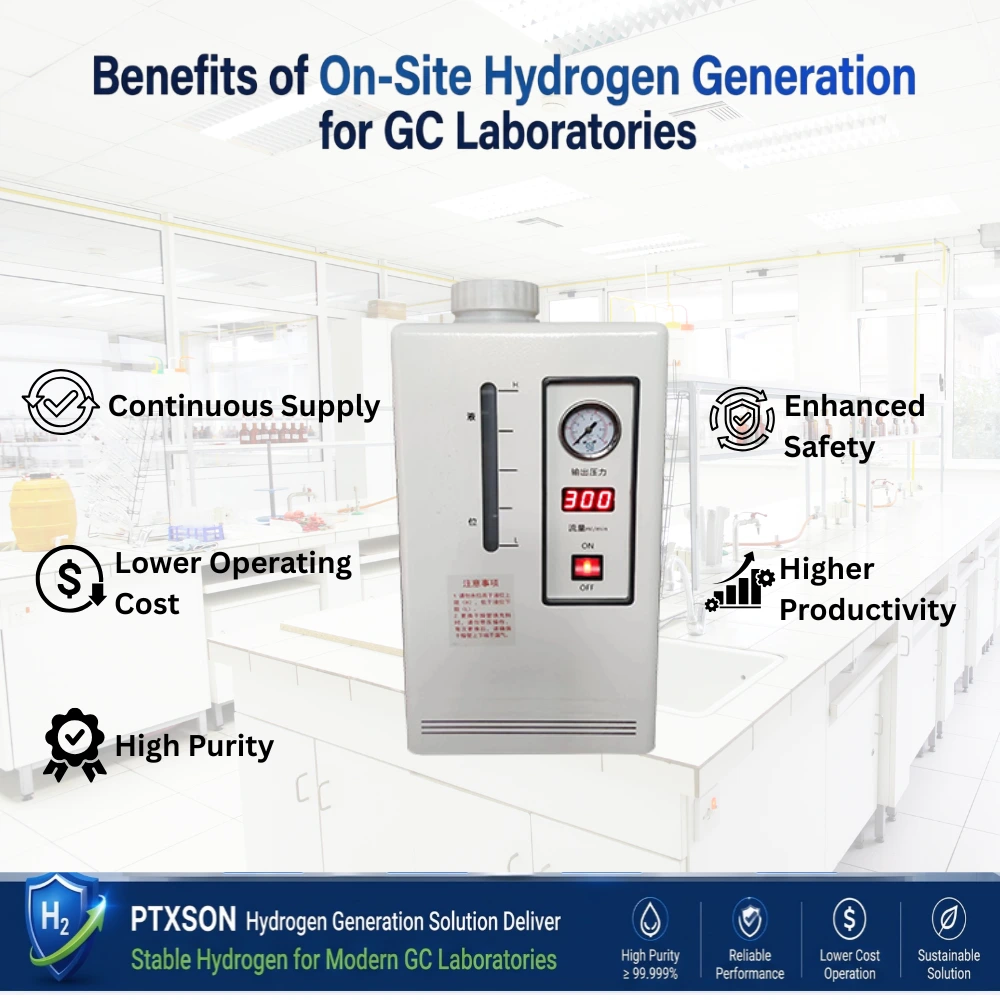
The most significant benefit of a modern supply solution for hydrogen in the lab is the ability to produce hydrogen on demand. Laboratories will no longer have to order cylinders or keep inventories of replacement cylinders.
A GC hydrogen supply system that integrates the gas into the system allows continuous operation of the instrument while minimizing the administrative burden of gas procurement.
Lower Operating Costs
Laboratory production of hydrogen can contribute substantially to lower operating costs. Rental, delivery of cylinders, emergency deliveries, and supplier contracts are virtually eliminated in costs.
Many facilities claim high return on investment from on site hydrogen generation for their hydrogen carrier gas for GC systems over a period of time.
Enhanced Laboratory Safety
Usually modern hydrogen generators provide only the amount of hydrogen required on demand, significantly minimising the amount of gas stored in the laboratory. This will help facilities to comply with the requirements for laboratory compliance and safety, as well as meet internal risk management needs.
On-demand generation is a viable laboratory hydrogen supply solution for organizations with a laboratory gas safety focus, as it allows them to reduce minimizing hydrogen storage while maintaining operational efficiency.
Consistent Gas Purity
The purity of a stable gas is vital to ensure analytical accuracy and instrument performance. Great hydrogen generation systems provide constant gas composition for reliable chromatography results and better reproducibility.
A reliable gas supply for the analytical gas will have a direct impact on the performance and reduce the variation of the instrument in the laboratory.
Pharmaceutical Laboratories
Analytical result accuracy is essential for every pharmaceutical testing laboratory in drug development, quality assurance and regulatory compliance testing. Continuous operation of the instruments in GMP environments is supported by reliable hydrogen generation.
Environmental Testing Laboratories
The laboratory of Environmental testing has the capacity of high-volume testing of air, water and soil samples. Automatic gas supply keeps analytical schedules and regulatory reporting deadlines in place.
Food Safety Laboratories
Gas Chromatography is used in a modern food safety laboratory to detect contaminant, pesticide residues and product impurities. Secure gas generation increases productivity and test efficiency.
Petrochemical Laboratories
Stable supplies of gases are essential for characterization, process monitoring and product quality testing in every petrochemical laboratory. High demanding analysis workloads are supported by hydrogen generation systems.
The University and Research Institutions World
A large number of instruments are often used in academic laboratories and research institutions at the same time. Scalable hydrogen generation solutions are key to sustaining research and lab growth.
Hydrogen generation platforms are becoming a standard requirement in modern laboratories, with the need for both higher production volumes for single instruments and larger analytical laboratories.
The advanced hydrogen generator for gas chromatography applications offer:
A well-designed solution for hydrogen supply for a laboratory can provide the basis for an analytical workflow that performs reliably and efficiently.
Stable hydrogen production technology
PTXSON is developing advanced systems for hydrogen generation which can provide stable and continuous hydrogen supply for demanding laboratory environments.
The new product series meets the needs of Analytical Laboratories
Each PTXSON gas chromatography hydrogen supply system is designed to meet the special needs of analytical laboratories that demand a dependable supply of hydrogen gas and a high level of purity.
Global Installation Experience
Laboratories, research centers and industrial entities worldwide use PTXSON hydrogen generation equipment.
Technical Support and Service
Full technical support, maintenance and operational assistance enables laboratories to get the highest value from their equipment.
PTXSON is a professional laboratory hydrogen generator manufacture supplier, which supports OEM partnership, private label project and global co-operation opportunities for hydrogen generator distributors.
PTXSON is a trusted OEM hydrogen generator supplier, and a hydrogen generation solution provider, who still provides hydrogen production technologies to the laboratories.
Is the utilization of hydrogen as stationary gas possible in gas chromatography?
Is hydrogen safe to use as a GC carrier gas solution?
How pure is the sample needed to be for GC use?
What is the consumption of the hydrogen in a GC system?
Is it possible to power several GC instruments from a single hydrogen generator?
What are the benefits of on-site hydrogen generation in terms of cost?
How often does a hydrogen generation system require maintenance?
What are the best industries for lab hydrogen?
Current analytical laboratories must have reliable hydrogen for gas chromatography to make them efficient and analytical consistent. With fluctuating helium supply and high gas prices, more labs are turning to hydrogen generation on-site for GC to help ensure sustainability and productivity.
Using a reliable hydrogen supply for gas chromatography strategy, laboratories will be able to decrease running costs, enhance laboratory compliance and safety, ensure uninterrupted gas supply, and remove reliance on external cylinder supply.
A higher level of analytical demand will give more and more importance to more advanced solutions for hydrogen supply and more scalable systems for hydrogen supply to hydrogen carrier gas for GCs in the future.