Hydrogen-based welding systems are gaining momentum through the precision metalworking sectors, including jewellery making, repair of electronics, and copper fabrication. A contemporary flame welder that uses the electrolysis of water is redefining the way craftsmen and industrial consumers will look at clean heat usage.
A hydrogen flame welding system, also known as an HHO system or hydrowelder, is a system that produces gas when it is needed by splitting water into hydrogen and oxygen. This does away with the utilization of hydrocarbon fuels and replaces them with a cleaner source, generally referred to as a water torch system. The core of the setup is in the generation of a steady stream of hydrogen flame, which provides a fine mixture of hydrogen and oxygen to the torch.
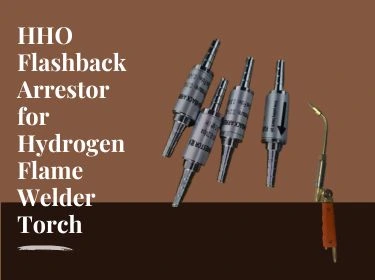
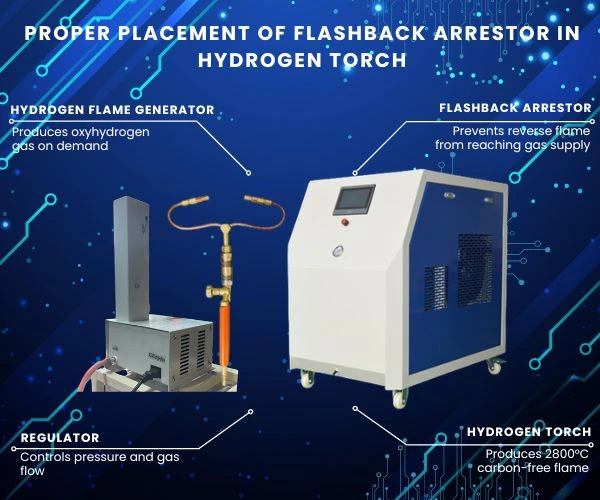
A hydrogen torch has a sharp, high-temperature hydrogen flame of around 2800 o C, unlike the more standard gas systems. Not all the carbon contaminates the flame, and thus the flame is ideal for delicate soldering, micro-welding, and precision brazing as the combustion process is carbon-free. With these benefits, however, safety is a primary concern, especially in terms of applying the flashback arrestor for torch to avoid reverse flame propagation.
Hydrogen flame generator is not just another act in the alternative fuel accounting; it is a technological change towards efficiency, eco-friendliness, and cleanliness in metallurgy.
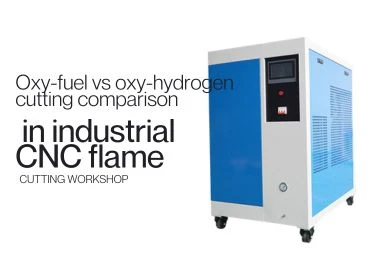
A particular machine in this area is the oxyhydrogen welder machine at OxygenHydrogen-Generator, which is meant to be used in precise welding tasks; this machine is an output of the water electrolysis process, so that the gas is generated on the spot.
The system is often referred to as a brown’s gas hydrogen generator, which does not necessitate carrying around cylinders because there are none; the oxyhydrogen gas is generated when in demand. This minimizes the store risks and reduces the leakage issue. It should be noted, however, that it is not possible to completely get rid of cylinders and therefore flashbacks are not completely avoided. It is still necessary to integrate a flashback arrestor for torch pieces in a proper way to operate safely.
Key features include:
To users who are researching on flashback arrestor how it works, the system generally has safety valves and water bubblers as the first safeguards. With this said, there is a question of the process of how to make hho flashback arrestor systems themselves. It is worth noting that certified arrestors must be employed at all times instead of the improvised gadgets.
In general, the machine is characterized by the steadiness of flame control and high operation efficiency, especially in the conditions where clean and oxidation-free heating was needed.
Thirdly, as a way of operating the hydrogen systems safely, it is basic to know what is flashback arrestor technology? A flashback arrestor refers to a safety device that is designed to prevent a flame from flowing back to gas hoses, regulators, or gas generation units.
The flashback may appear in hydrogen-based systems, particularly when using a hydrogen torch, in case the speed of the flame is higher than that of the gas flow. This may lead to combustion propagating with the supply system.
An effective flashback arrestor devised to handle the usage of torches carries out several vital functions:
The most frequently asked question is, are flashback arrestors necessary to work with on-demand hydrogen systems make any sense? The response is an absolute yes.
Oxyhydrogen generators are safety with flash back arrestors although flashback may take place, there are various anti tempering safety tools that will ensure the safety of the machine that will be in place. The hho gas in the pipeline of the machine is extremely small, and the pressure is not greater than 0.17Mpa in order to achieve continuous hho gas. Once the pressure exceeds 0.17Mpa, the machine will shut. therefore, one will not have a problem with personal safety.
The combustion properties of hydrogen require progressive layers of safety measures to help in protecting safe operation on a daily basis.
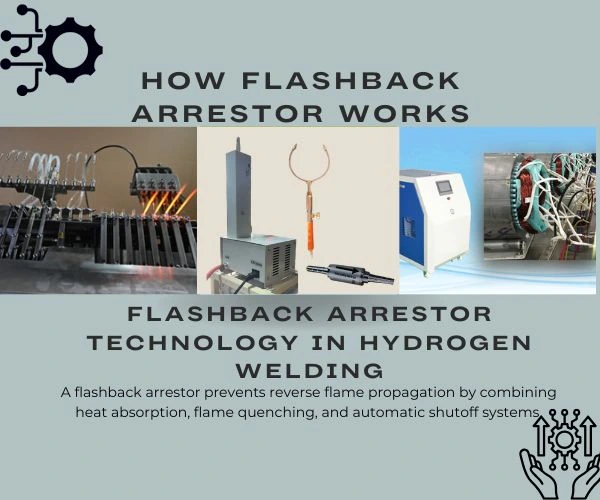
To learn about how a flashback arrestor works, there is a need to look at its inner parts. Delay mechanisms. Multiple protective measures are combined to interrupt the propagation of the flame in industrial-grade arrestors.
The main concept of a flashback arrestor in gas welding is the fast absorption of heat and the extinction of the flame. A sintered metal or ceramic part inside the device scatters the heat of a reverse flame, causing its temperature to drop below the ignition point.
A typical welding torch flashback arrestor consists of:
It is also necessary to place correctly. Arrestors are normally fitted close to regulators and at torch points of entry. Dual-layer protection has proven to be very effective in decreasing risks in the hydrogen applications.
The low-quality or uncertified arrestors might not be able to quench adequately. Due to the fact that the appearance of hydrogen flames is also the fastest among several other types of fuel, only specialized, hydrogen-rated equipment is supposed to be utilized.
Hydrogen has special safety considerations as it has a large flammability range (only 4 to 75 percent in air) and very low ignition energy. Even a small leak of gas or lack of maintenance of equipment when using a hydrogen torch can lead to the possibility of flashback or unintentional ignition.
The entire torch system should be regularly checked by the users in order to work safely. Periodically inspect the flame torch body and gas hoses concerning leakages, cracks or loose connections. The solution is a leak test prior to operation in order to avoid flashback accidents. Weak spots of copper nozzles, flame torch tip, return fire valve (flash back arrestor) etc. ought to be thoroughly inspected and swished as part of routine maintenance.
Periodic inspection and replacement of wear components can greatly minimize operational hazards and contribute to the stabilized and controlled resort of the flames.
Wrong purge procedures of hoses, wrong pressure setting or insufficient safety valves predispose flashback. This confirms the need to install a flashback arrestor for torches to systems with torches as an obligatory safety measure.
There are still operators who keep on searching online for how to make hho flashback arrestorsolutions. The systems of hydrogen, however, are very sensitive to the speed of flame, proportions of gases, and volume of the chamber. Ad hoc equipment cannot effectively control these variables.
Some of the significant safety practices are:
Hydrogen flame systems provide outstanding performance but not when the performance is in the hands of undisciplined safety measures.
In assessing flame protection equipment, the specialists should consider certified products that are intended to be utilized as a hydrogen flame arrestor for hydrogen gas installation.
An effective flame arrestor for hydrogen gas has been designed to very tight tolerances, giving good heat dissipation and pressure withstanding. Learning flashback arrestor how it works sheds light on the reason of precision of manufacturing that is a non-deal.
Some of the main features to be considered are:
Arrestors that are used in industry are performance tested under controlled conditions, which homemade versions are unable to imitate.
When it comes to hydrogen welding, there is no room to try. There is a purpose of certified parts: they save lives and equipment.
The principle behind making hho flashback arrestor is frequently attractive to abiding amateurs trying to save money. The dynamics of hydrogen flames however are complicated and not merciful.
The rate of flame propagation is fast and this demands accurate internal geometries in arrestors to suppress combustion speedily. Even a small design error may cause the breakthrough of flame would then cause disastrous effects.
Professional arrestors include:
Even handmade solutions are not guaranteed to perform with the set of varying conditions. Instead of trying to fabricate, the user is advised to aim at getting certified hydrogen-rated devices. Cost need not always be put before safety considerations
Even quality equipment does not work when installed inadequately. In flashback arrestor in gas welding arrangements used in gas welding systems, it has been shown that it is best practice to have arrestors at the regulator outlet and on the handle of the torch itself.
An aggressively fitted flashback arrestor for torch to make use of a torch minimizes the chances of reverse combustion to components. In the case of dual placement, an overlapping layer of protection is developed.
Best practices include:
When there is a regular check-up system, safety devices are likely to maintain an operational state even after some time. High usage systems are such that proactively replacing, as opposed to risk exposure, is often more economical to undertake.
The possibilities of the hydrogen-based welding technology speak volumes in their own benefits: the combustion is clean, the flame temperature is high, the control can be performed precisely, and the technology is ecologically friendly. The work of a hydrogen torch renders it ideal in the delicacy and high-value work.
Nevertheless, the system of a hydrogen flame should not be active without the authorized flashback arrestor for the torch in place. The knowledge on flashback arrestor how it works supports their importance as these gadgets are not optional extras.
Although there has been online interest in how to make hho flashback arrestor solution, the right direction to take is obvious: accept those safety devices that have been engineered, tested, and certified.
The Hydrogen flame welders are the future of clean metalworking. However, unprotected performance is an issue that no professional can afford. Safety cannot be upgraded, but it must be.