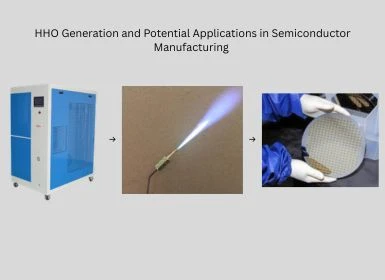
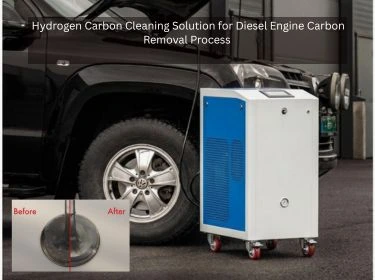
Carbon deposits are a by-product of combustion in an engine. Products of combustion (soot) can deposit in components like inside the intake passages, combustion chamber, and valves, as well as inside pistons. The quantity and place of deposits is influenced by engine design, operating environment, fuel quality, driving habits and diesel engine maintenance. As deposits start to increase in size, they can cause the engine to respond abnormally, combustion problems, emissions and fuel consumption. The diesel engine carbon removal should therefore be thought of as one of a series of steps in a strategy to maintain the engine, rather than a solution to mechanical problems.
So, how to remove carbon buildup in diesel engines? This will depend upon the extent and the location of the deposits. These can range from manufacturer-recommended fuel additives, fuel or intake system cleaning, mechanical cleaning during component servicing and carbon cleaning equipment that uses hydrogen. Not all of the above mentioned methods are applicable to all engines and cleaning should be carried out as specified by the vehicle manufacturer and depending on the condition of the engine. By maintaining the diesel engine regularly, you can also minimize the conditions which can lead to excessive deposit build-up.
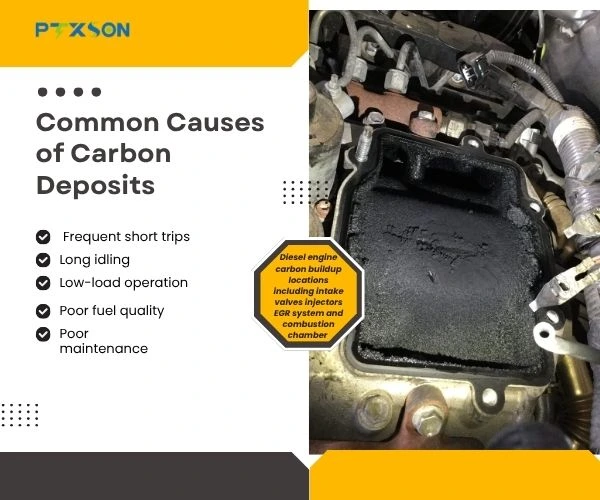
Carbon deposits may occur where fuel is not completely burned or where the soot and combustion residues are deposited each operating cycle. Deposit accumulation can be caused by frequent short distance trips, long periods of idling, low load operation and inadequate maintenance. Intake valves and passages, injectors, EGR-related components, pistons and combustion chambers, are examples of components that may need special attention when looking for exhaust recirculation or combustion by-products.
The signs of carbon buildup in engine of rough or erratic idling, slow acceleration, loss of throttle response, smoke or change in fuel use can be indicators that something is wrong with the engine systems and the engine needs a carbon treatment. These symptoms are not, however, necessarily indicative of carbon deposits. Mechanical issues, such as injector problems, air-flow restrictions, turbocharger problems, EGR problems, sensor issues and more can give similar symptoms. Thus it is essential to properly inspect the engine before deciding to clean carbon build up in engine components. This process of diagnosing saves you from unnecessary diesel engine carbon removal and is more targeted.
One of the more readily available methods for engine maintenance would be the use of fuel additives. Formulation dependent, these products are intended to be used through the fuel system and can be used to help control some deposit problems relating to injectors and combustion. The effectiveness of their use is dependent upon the formulation, the engine condition and the type of deposit involved, and they should only be used as specified by the manufacturer of the product and the vehicle manufacturer.
In cases of deposits in certain regions, there are particular methods that might be more suitable. Intake valve carbon cleaning is dedicated to deposits found in the intake system, whereas fuel system carbon cleaning can be used to clean areas related to fuel delivery which may include fuel injectors. Heavy deposits or when components must be removed for inspection or repair may require mechanical cleaning. Therefore, it is important to understand the best engine carbon cleaning method, the type of engine, the services required and the cause of the deposits before deciding which diesel engine carbon cleaner method to use, and not to assume one cleaning technique will solve all carbon related problems.
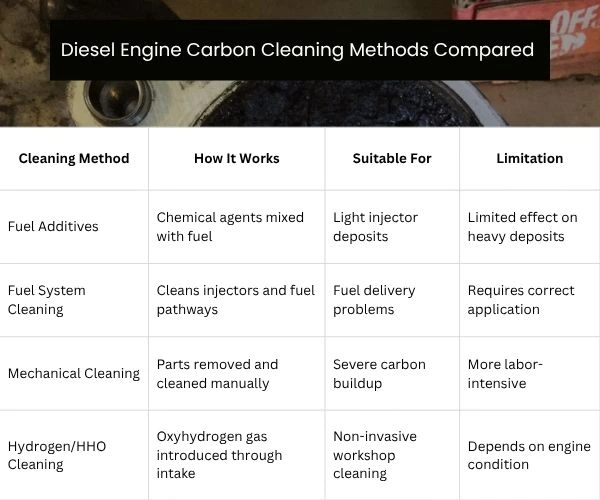
In the case of diesel engine carbon cleaning, an Oxyhydrogen or HHO gas mixture (from electrolysis of water) is used in the diesel engine. PTXSON’s process involves injecting hydrogen and oxygen into the engine intake during the engine’s running time, and using water and electricity to produce the hydrogen and oxygen. The manufacturer says it is a non-invasive process as it does not need to disassemble the usual engine.
A HHO generator for engine cleaning is thus not a typical chemical solution. The equipment produces the gas outside the fuel, and the gas is added to the fuel via the fuel intake system. The HHO mixture is said to combust with the fuel, and is conceived to aid in the removal of carbon deposits from the engine. These are descriptions of the technology by the manufacturer and may be different based on the type of engine, operating condition, and severity of the engine deposits. Since there are many claims about the best engine carbon cleaning method, it is better to rely on independent tests, manufacturer’s specifications, and a professional inspection.
The diesel engine carbon cleaning machine is the combined system of the gas generation equipment and the controlled delivery equipment, which is used in the workshop. For example, the PTXSON TX-HO1500 produces hydrogen and oxygen by electrolysis of the water and electrolytic solution. According to the manufacturer specifications, the maximum gas output is 1,500 L/h, maximum working pressure is 2 kg/cm², and can be used in both diesel and gasoline engines.
The basic operation procedure is simple. The generator is used to provide the oxyhydrogen gas, the gas pipe from the machine is attached to the gas pipe of the vehicle, and the engine is started up. According to PTXSON, the machine features automatic controls, water-shortage protection, multiple anti-backfire systems and overpressure shutdown. It also gives a reference to a cooling system which is supposed to be operating continuously.
An engine carbon removal machine can be a specialized piece of equipment for auto repair and maintenance shops to provide carbon cleaning services without regularly taking engine parts apart. This equipment can be applicable in garages, dealerships, fleet maintenance facilities and commercial vehicle service centers. It is advised, however, to be operated by a trained person and following the manufacturer’s instructions and workshop safety procedures. The PTXSON machine is particularly promoted as a diesel/gasoline hydrogen engine decarbonization machine.
How often should you carbon clean your engine? An engine carbon clean before and after comparison should be based on objective and measurable factors and should not be subjective. Workshops can make comparisons of idle quality, exhaust smoke, acceleration response, fuel consumption, or fuel diagnostic readings before and after a cleaning procedure. Any change should be viewed in light of the vehicle’s mileage, condition of the engine, severity of the deposits, condition and maintenance history of the fuel system. Mechanical faults which are not related to carbon deposits cannot be corrected by a cleaning procedure.
The carbon cleaning potential of the engine, therefore, depends on the condition of the engine. PTXSON claims its TX-HO1500 is a cleaning system that removes carbon deposits; fuel saving, power restoration and emissions reduction are all among the engine carbon clean benefits the company lists for its products. Such statements are the manufacturer’s claims and are not intended to make absolute claims of performance.
There isn’t a hard and fast rule for how often to carbon clean an engine either. Rather, the cleaning frequency should be based on the vehicle manufacturer’s maintenance guidelines, driving conditions, inspection findings and deposits issues. Some of the elements of a good diesel engine maintenance checklist include changing oil and filters at the right time, checking the air filter, servicing the fuel system, checking the injectors, and, if applicable, checking the intake and EGR systems for symptoms of wear or tear, or any performance changes. Excessive idling and operating at the wrong temperatures can also help with regular engine maintenance.
How to remove carbon buildup in diesel engine?
– Treatment of deposits will vary according to their size and location. Some of these options may be manufacturer approved additives, fuel or intake system cleaning, mechanical cleaning and hydrogen-based cleaning units. Always consider diagnosis before deciding on treatment.
What are the signs of carbon buildup in engine to look for?
–Excessive deposits can cause a wide variety of symptoms to appear, such as rough idling, slow response when accelerating, increased smoke and fuel consumption. Other mechanical problems may present the same symptoms, so a professional diagnosis is suggested.
Which is the best engine carbon cleaning method?
–No one method is the best for all engines. It will depend on the type of engine, the position of the deposits, how bad they are, maintenance history and workshop needs.
What is the working principle of a diesel engine carbon cleaning machine?
–The mixture is produced in a machine using electricity to split water and sent to the engine inlet during a special cleaning process. According to PTXSON, this is how TX-HO1500 works.
Maybe diesel engines cleaned by hydrogen?
–Yes, the manufacturer has equipment specifically designed for use in diesel and gasoline engines, like the PTXSON TX-HO1500. Suitability for the specific engine and application should be verified.
When do you need to have your engine carbon cleaned?
–No single time is necessarily correct for all diesel engines. The decision should be carried out based on maintenance schedules, operating conditions, mileage and inspection results.
What is the purpose of an engine Cleaning HHO generator?
–An HHO generator can be used to split water into hydrogen and oxygen gas that can be fed into a carbon-cleaning procedure in an engine.
When is the time for a workshop to have an engine carbon removal machine?
–If a workshop desires to provide a service for carbon cleaning of a vehicle without disassembling it, then they may consider such equipment when the vehicle has been inspected accordingly. It should be used within the technical specifications, safety rules and workshop rules.