Very much like all the other industrial metals, copper retains its electrical conductivity, thermal properties, strength and formability. Used in the production of many electronics, power generation, HVAC, motors, transformers, many electric equipment and heat exchangers. That is to say, if the price of copper were to rise, that could directly impact the copper manufacturing of products that use a considerable amount of the metal in their make-up.
The market this year has also paid him the attributes of cost management of industry raw materials and inputs. May 21, 2026 stacked markets highlighted issues with inflation and higher bond yields, thus driving further manufacturers’ focus on material efficiency and production costs. Costs can rise from a wider inflationary backdrop, in both raw materials, financing, and labor, which further accentuates the trend of making it happen more efficiently.
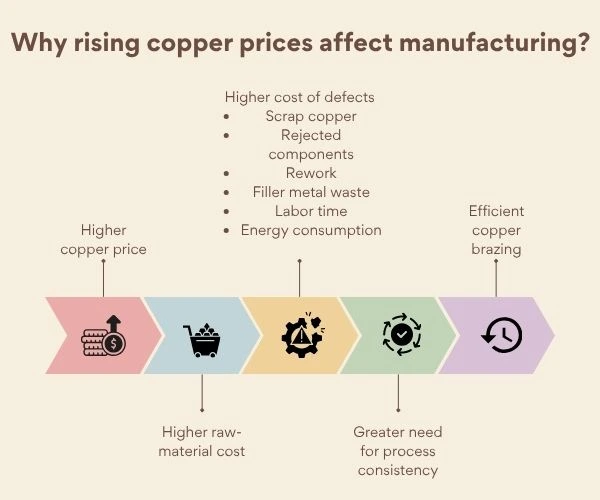
Increased copper prices are not just a higher price on raw material purchases to manufacturers. They can also increase the financial impact of scrap, rejected components, rework and inefficient production processes. As copper grows more costly, any preventable loss is more grievous.
This is especially true in the context of optimizing production processes in the copper industry. There are some areas where manufacturers can seek more uniformity and productivity, such as joining operations. For instance, copper brazing technology can be done in a controlled fashion between copper parts, and the manufacturers can create repeatable production processes.
The copper cost is not only the cost of tubes, wires, bars, sheets or other materials but also the cost of the time between this and the completion of the finished product. There also are labor, energy, equipment, and quality-control costs for a manufacturing process. Inconsistent results from a joining operation could result in rejected parts, extra inspection, rework, or production delays for the manufacturer.
Copper brazing is simply a process of raising heat to the parts to be joined and the appropriate fill material to a temperature high enough to cause the filler to melt and flow into the copper joint brazing without melting the base copper. It can hold the component/s in position with proper heat control to create the needed connection with the filler material.
Repeatability is essential for high volume parts. The important points in an effective copper brazing process include uniform heating, flow of the filler metal and repeatability of the joint formation. An inadequate heating can cause over-heating, uneven filler quantity or inadequate joint quality.
A properly managed copper joining process is important in more than just quality of connection. It can benefit manufacturers in minimizing unnecessary rework and give consistency in the production process. If the raw material is a major cost driver in the manufacturing of the product, minimising the amount of rejected copper components can become a key indicator of manufacturing effectiveness.
One of the best-known examples used for the controlled joining of copper components is when soldering is used in conjunction with an ultrasonic flux remover.A very familiar area where controlled joining is significant is when soldering is used with a flux remover that removes flux using ultrasonic means. Copper tubing assemblies are key components used in a wide range of applications including HVAC and refrigeration systems, heat exchangers and thermal-management equipment. These applications may require joints to deliver mechanical strength and leak-free capabilities, depending on the system type.
During copper tube brazing, it is necessary to heat locally around the braze area to heat the brazing filler to the proper temperature and flow. The goal of heating is not only to produce high heat but to put this heat into the joint in the right way, while not over heating unnecessary parts of the work piece.
Factors that are important to copper tube manufacturers when brazing copper tubing include the diameter of the tube, wall thickness, joint configuration, type of fill metal used, production speed, and type of heating. In situations where high volume production is required, repeatability is particularly important as even slight production variations can be critical in cases where you have hundreds or thousands of assemblies to be produced.
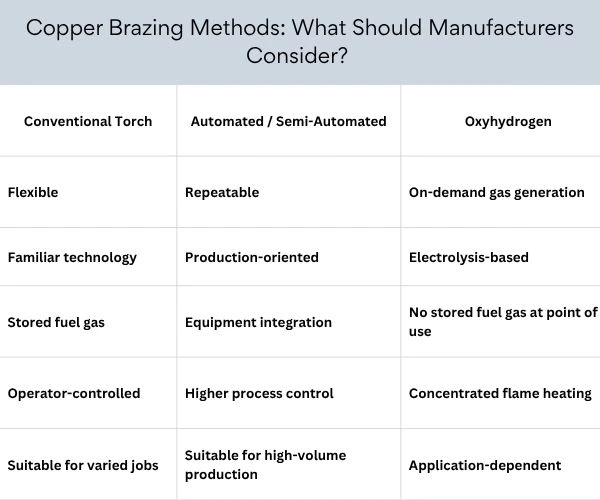
Depending on the purpose, the various copper tubing joining methods could then be studied. Torch methods, automated or semi-automated processing, as well as other flame technologies can be compared according to the following criteria: Accessibility, Heating requirement, Operator control, and desired production consistency.
There are some copper brazing processes that can be used, depending on the design of the component, design of the joint, the type of filler, and the environment for manufacturing. Conventional torch brazing continues to have a major usage due to its flexibility and its adjustment capabilities to various component shapes.
Cylinders, fuel storage requirements and workplace specific requirements may occur with the conventional fuel-gas flames. Flame position and heat control will also need to be controlled.
This has motivated manufacturers to consider new options as well as the traditional methods. Several factors can affect choosing the copper brazing equipment, such as heat concentration, operator control, production volume, energy demand and the work environment.
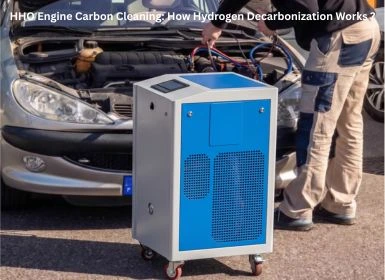
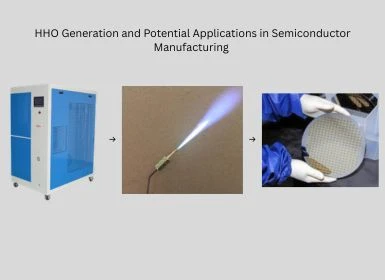
One technology that could be evaluated to determine it’s suitability for an industrial application is oxyhydrogen heating. Oxyhydrogen equipment produces the gases needed for the operation by electrolysis, instead of using stored fuel gas as in traditional fuel gas systems, and produces high temperature flame at the point of usage.
Not all of the most theoretically high flame temperatures (Tmax) is necessarily the best. Considering the sets of specified quality requirements, quantity and geometry of components and parts, as well as the actual necessary heating requirements for the manufacturing process to execute the copper brazing process, the manufacturer should choose the kind of copper brazing applications and copper brazing equipment.
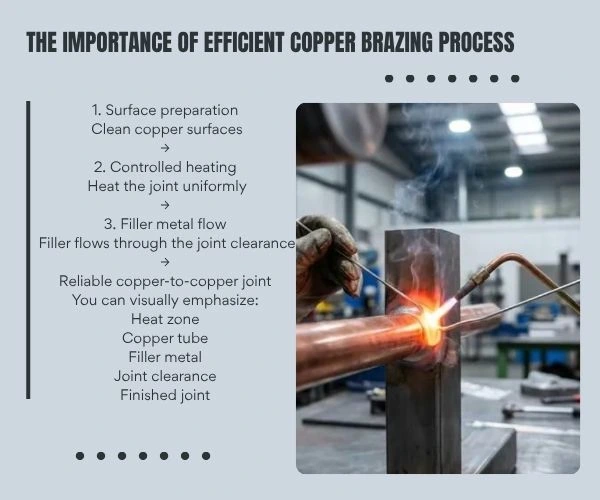
Many factors have to be considered during copper to copper brazing, and only if multiple parameters are adjusted correctly is a good weld obtained. Surface preparation is necessary because filler-metals may have trouble flowing over the surface if there are oxides, oils or other residues present.
A consideration of joint clearance is also important. The clearance between mating parts must be acceptable to the type of material and joining method chosen to be used for the filler. Even a well controlled heating process may not give the desired result if the joint geometry is not suitable.
When copper joint brazing, the heat should be applied in a controlled and reasonably-even way. Too much or uneven heating can influence the properties of filler metals as well as subject the surrounding copper to undue thermal stresses.
Therefore, variables like flame positioning, heating time and temperature control are important aspects of the copper joining process, which needs to be repeatable. Consistency plays an important role in production as each extra defective joint will be equivalent to wasted materials, labour and production time.
In manufacturing situations, where leaks or electrical connection issues may hinder the final product’s quality and functionality, reliable copper-to-copper joints become a critical component for success. Selecting suitable equipment, however, should be complemented by the use of appropriate process control, inspection and operator training.
The process of oxyhydrogen brazing is a heating process where the high-temperature oxy-hydrogen flame is formed by a combination of hydrogen and oxygen produced by electrolysis. Hydrolysis is used in an industrial process using water as a feedstock and generating the water in the form of gases which are fed to an appropriate industrial torch.
The flame thus generated may be applied to an area to deliver high temperature concentrated in place. This may be pertinent for joining of copper parts where the efficient heat conductivity of copper could affect the brazing process by application of heat in the right places and ways.
A possibility of oxyhydrogen is any availability of gas production on demand. A proper generator can generate oxyhydrogene as necessary compared to a system that relies on cylinders of the same type of stored fuel gas. This can alter the way that manufacturers control gas supply and gas equipment in the manufacturing environment.
But the use of oxyhydrogen does not imply the superiority of all the conventional methods. When selecting the copper brazing technology, manufacturers should consider the configuration of the joint, the production quantity, required heating profile, physical needs for the operator, and safety precautions that can be applied.
With proper application oxyhydrogen can offer another choice to manufacturers in selecting their controlled flame heating and copper brazing equipment.
PTXSON is a prime supplier of oxyhydrogen flame technology, suitable for industrial welding and brazing. Its TX-HO3500 type of oxyhydrogen brazing flame welding machine is of alkaline electrolysis type, with capacity 3500 l/min. It can be used to weld copper wire, braz joint flat copper bar and listed applications include copper and brass brazing and the brazing of power transformers.
The maximum Gas Output of the TX-HO3500 is 3500 L/h and the system features Automatic Water Feed. These specifications apply for manufacturers who are interested in assessing copper brazing applications in terms of the production volume needed and the amount of gas needed for specific applications.
Equipment may be considered for use in industrial applications that include copper parts, motors, transformers and electric manufacturing. Depending on the copper wire or flat copper bar application, it may require different geometries and heating to achieve proper results; therefore the selection of an appropriate torch and flame control are important.
In actual manufacture, appropriate equipment must be used in conjunction with proper joint preparation and operator training, combined with an appropriate choice of filler metal. It is the machine that gives the technology for generating the flame, and how well that technology is applied in the overall brazing process is determined by the brazing procedure.
The TX-HO3500 therefore should be examined in comparison with the dimensions of the components to be brazed, their joint configurations, production volume and the type of heating process that the manufacturer is considering for their production.
Choosing the right copper brazing equipment requires so much more than picking the machine that produces more gas than necessary. The equipment must be suitable for the actual production atmosphere.
Component sizes, the type of joint, the intensity of heat needed, output rate of joints per shift, and the amount of operator control needed are all factors manufacturers should consider. The equipment should have enough capacity to meet application requirements, but do not depend on being able to obtain best results at full capacity.
Process consistency is particularly crucial in the copper manufacturing domain, as copper components can be significant material investments. If the joint does not pass the inspection, losses can be Copper, Filler material, Labor production time.
The optimal copper brazing technology could help develop a more repeatable joining process. With proper inspection and process control, this can help manufacturers to minimise unnecessary rework and increase efficiencies in copper component usage.
Today, copper brazing is used in many different industrial fields. Examples of applications include copper tubing brazing for the manufacture of HVAC and refrigeration systems, and for electrical applications, copper conductors, bars and others are joined.
Common applications include:
When it comes to systems requiring mechanically sound and that require being leakproof, copper tube brazing is of a special importance. The integrity and geometry of the copper conductors and connections of electrical applications might be subject to higher focus.
Different copper brazing applications require different joint configurations, which means that the production volume and the needed temperature for each application varies. Copper manufacturing companies should evaluate the choice of joining technology on each individual product rather than use the same brazing process for all components.
There are no shortcuts to making a reliable copper join, it starts with proper preparation in place. The copper surfaces should be prepared so that they are in a good state of cleanliness and that there are no contaminants on the surface that would adversely affect the flow of the filler metal. A compatible filler material that is appropriate for the copper components and their use is also a proper choice for manufacturers.
Joint clearance is required with the filler as it has to move through the joint easily. When using heated copper brazing methods(H-CB), the heat should be applied uniformly and slowly around the part to be brazed and not focussed for an unnecessarily long time.
It is also important that the type of flame should be similar to the type of component/ joint. Flame position and pattern of heat should be taught to be followed appropriately by the operators, including their use on different dimensions of the component.
Finished joints must be checked for uniformity and possible faults. Inspection may range from a visual inspection to leak test to quality control – dimensional, to the application.
Equipment selection should also be done based on the production requirement, not only on the top capacity. Manufacturers should take into account the amount of gasses they will need to be producing, operation requirements, type of torch, maintenance requirements, and the application.
It’s also crucial to follow the safety codes for the various types of products you are handling. High temperature and gaseous substances may be present during a brazing process, so it is important to include the correct ventilation, PPE, maintenance of the equipment and training of the personnel in the overall copper brazing process.
Today, there’s nothing simple about making a perfect brazing flame. It involves making the necessary joint features by bringing about planned and repeatable heat.
With the volatility of copper price, it is only more important for manufacturers to look into how they are utilizing this strategically important material. As copper becomes costlier, the cost of rejected parts, on the needless re-work and inefficient joining methodologies will affect the core business of the manufacturing company.
Thus, the process of copper brazing is of great significance for the copper intensive manufacturers. A controlled joining process can contribute to a consistent production and also assist companies to concentrate on the minimisation of unnecessary losses of material and labour.
Manufacturers should think about the following factors when applying copper to copper brazing: surface preparation; joint clearance; filler-metals compatibility; heat control, and heat inspection. Don’t assume that one process equips will work everywhere; performance will depend on the production environment.
One solution offered by developers in Oxyhydrogen copper brazing technology is applicable to projects that require flame-based contact with the material that can be assessed by the manufacturers. An oxyhydrogen generator for brazing can produce oxyhydrogen by electrolysis and provide it for controlled heating process applications as an alternative to the typical fuel-gas brazing process.
Thinking outside the box and analysing such joining technologies using modern techniques as well as traditional processes can help manufacturers make the most of each and every copper component they produce.