The issue of combustion efficiency, which in contemporary waste management systems has lost its technical denomination of a parameter, is the cornerstone of the safety, duly compliance, and environmental accountability. In medical facilities, where hazardous and contagious waste is created on an everyday basis, the standard of combustion can help in safe waste neutralization or transform waste into a second environmental hazard. This complicates the issue of flame efficiency in designing and operating the incineration systems.
The role of flame chemistry in the effectiveness of waste break down. Flame composition determines the level of oxidation, heat distribution and emission profiles. The incomplete burning may be caused by poor combustion which leaves toxic by-products that include dioxins and carbon monoxide. Because of this, there is an increased tendency towards cleaner and more controlled types of combustion in the hospital waste treatment facilities.
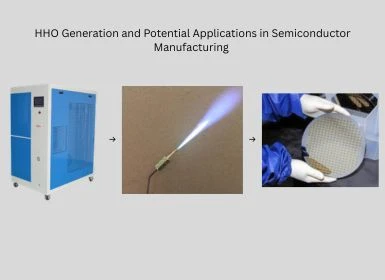
The brown gas incinerator is one of these new solutions and uses hydrogen oxygen mixtures that are produced due to the electrolysis process. This method brings in another dimension of control and purity in the combustion processes so it is very applicable in current applications of hho gas technology. The heart of this system is the hho brown’s gas generator that generates gas when needed, without the need to resort to the usual fuels, which would lead to more efficient and cleaner burning.
Medical waste management is an increasing burden in healthcare facilities posing a threat to the efficient management of those facilities. As the number of patients grows, and the number of regulatory requirements increases, hospitals are required to make sure that hazardous wastes get disposed of in a manner that gets rid of any biological hazard but this is achieved without compromising on environmental stewardship. This has caused incineration to be a popular method but the traditional systems tend to be unable to fulfill modern demands.
Traditional incinerators are often faced by suboptimal burning resulting in unburnt waste and toxic production of emissions. There is a high risk of toxic gases, particulate matter and chemical by-products which are very harmful to the environment and to human health. Simultaneously, hospital waste management treatment regulatory schemes grow stricter, and facilities have to use cleaner and more efficient technologies.
This has generated a high demand of the advanced solutions like hho gas medical waste incineration which has a high level of combustion efficiency and less emission. These technologies are enabling healthcare providers to overcome the shortcomings of the conventional systems as they grapple with the requirements of operations and regulations.
HHO Brown gas technology is founded on the basis of water electrolysis which separates the water molecules to form hydrogen and oxygen gases. These gases then are mixed together and used as a source of fuel to generate a high temperature flame by igniting. This approach produces gas on query as compared to traditional fuels which requires storage and is associated with risks.
The hho brown’s gas generator is the heart of this system and it is tasked with the responsibility of generating hydrogen-oxygen mix in a controlled and non-interrupted fashion. The application of this browns gas machine is very common in the industry whereby clean and efficient burning is needed. Its skill to provide a steady and vigorous flame renders it especially fitting in the incineration procedures.
Moreover, oxy-hydrogen generator systems offer a scalable option to industries in search of cleaner options to fossil fuels. Using hho gas technology, such systems can achieve enhanced combustion efficiency and lessen environmental impact.
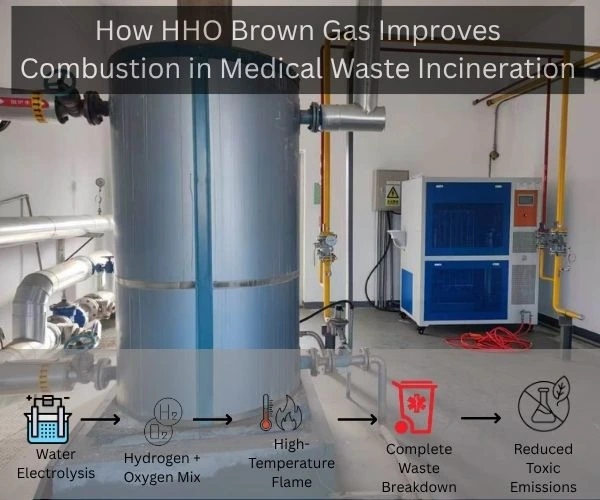
The usefulness of the HHO technology in incineration is its combustion properties. The hydrogen-oxygen flame that is generated by these systems achieves very high temperatures, and thus, breaks down all medical waste materials in a complete manner. This makes sure that even complicated and risky ones are eliminated completely.
The flames having Hydrogen are also more efficient than the conventional fuels, which means that they have a quicker combustion and use less energy. This enhances the performance of the system generally and reduces the amount of residual ash generated. This also helps the quality of the ash which becomes easier to handle and dispose safely.
Such systems like the hho gas furnace apply this technology to realise uniform heating and constant-combustion. In hho generator incinerator application systems, it translates to increased efficiency, reduced emissions, and increased reliability in its operation.
Environmental performance is one of the greatest benefits of HHO based incineration. The common emission of dioxins, carbon monoxide, and particulate matter are damaging gases primarily due to traditional incinerators that pollute the air and cause health issues. Conversely, there is a much cleaner combustion in HHO systems.
As the main by-product of hydrogen burning is water vapor, the emission is considerably lowered. This renders the HHO systems as a cleaner option of fossil fuel-based technology of incineration. It is becoming imperative to utilize such technologies to conform to the changes in environmental regulations with regards to hospital waste management treatment system.
Through the incorporation of hho gas technology, healthcare institutions can not only improve environmental footprint, but also be in line with global objectives of sustainability. This move towards cleaner burning is a major move in trying to modernize the waste management practices.
In addition to environmental benefits, HHO systems have great operational benefits. On-demand generation of gas is one of the most important characteristics, as the storage of fuel is not necessary, and reliance on supply chains is minimized. This streamlines business and makes it safer.
The reduced fuel use and high efficiency of combustion will translate to the cost of operation. HHO systems do not need fuel refueled often like in the standard systems, and can run 24 hours with no interruption. This will result in increased productivity and improved resource usage.
The above advantages translate to a cost effective and efficient process in the hho generator incinerator application environments. Performance is further improved by use of brown gas incinerator, which will give a stable and reliable flame to run continuously.
Advanced methodologues like the Brown Gas Generator of Incinerator offered by Ptxson are being included more often into modern incinerators. These systems are developed with the aim of providing high performance combustion and at the same time be easy to incorporate into the already existing infrastructure.
It has the following important characteristics: on-demand gas generation, steady flame output and high temperatures needed to achieve full breakdown of waste. The hho brown’s gas generator maintains the same level of performance meaning that it can be used both in small and large scale applications.
The browns gas machine can easily fit into the existing incineration systems, and the facilities can upgrade their systems without significant changes. In the use of hho gas medical waste incineration, this integration offers a viable route towards establishing cleaner and more efficient, operations.
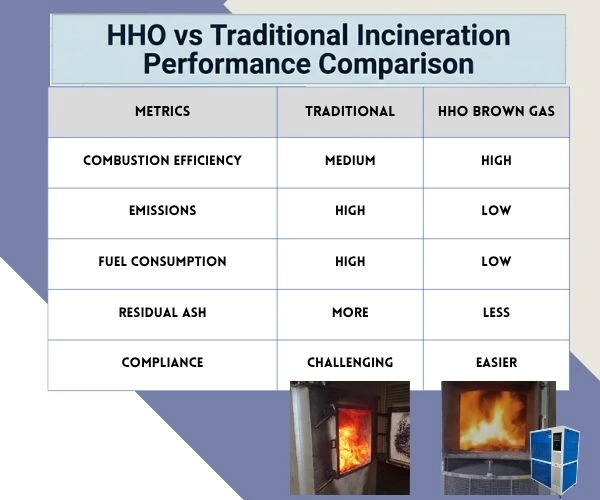
With the recent growth in the need to adopt safer and more sustainable waste management solutions, the HHO technology is gaining some traction as a successful alternative to the conventional means of waste management through incineration. Modern healthcare setting suits it well because of its capabilities to provide high-efficiency, less emissions and enhanced safety.
Use of hho gas technology is likely to gain momentum with more facilities appreciating its use. Systems such as the brown gas incinerator are the future of medical waste treatment as they have the potential to revolutionize hospital waste treatment processes.
Finally, with this in mind, the use of HHO in incineration can be a potential balance between performance, efficiency and affordability. Such technologies will remain relevant in designing the next generation of solutions as the waste industry moves to greener technologies.