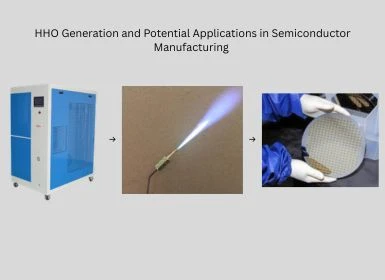
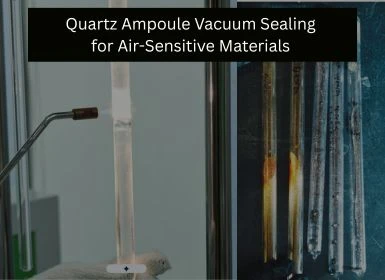
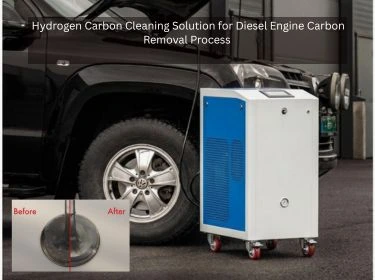
There is an enormous redesign of the industrial sector in the world as a result of electrification, the subsequent growth of renewable energy, and increased demands on energy efficiency. Global industries are making significant investments in electric vehicle, renewable power systems, smart grids, battery storage technologies and advanced HVAC infrastructures. With these technologies changing, the pressure of the manufacturers to achieve efficiency, reliability, and long-term system stability, as well as decrease production defects and operation costs, is increasing.
The quality of copper joining processes is one of the reasons why this change in industry happened. State of the art electrical and thermal systems rely upon a very dependable and good conductor, namely copper, in their connection systems. Low joint quality will reduce the efficiency, excess heat loss and reduce equipment life span. Consequently, precision brazing is emerging as a factor in transformer manufacturing and other energy guiding equipment applications that need dependability.
Increasingly complicated nature of industrial products also implies that manufacturers are asking a cleaner, more precise joining technologies which can support compact designs and high-performance operating environments. The move is leading to an increase in attention toward more sophisticated copper joining methods capable of producing reliable results at low oxidation and thermal degradation levels.
Copper is one of the most valuable industrial materials due to its excellent electrical conduction, thermal transfer ability and strength. It is common in transformers, heat exchangers, electric vehicles battery cooling systems, refrigeration systems and industrial electrical equipment. But the degree of performance of these systems is highly dependent on the quality of their copper joints.
This is particularly in current day energy systems, where even the slightest leakage or rise in electrical resistance can greatly diminish operational efficiency. This is particularly crucial in high-performance equipments where thermal management and conductivity have a direct impact on power use and stability of the system. With the need to have small and compact systems in industries, brazing copper to copper has been more difficult.
Small copper assemblies need to be controlled in regard to heat to prevent excessive heat to other components or destruction of insulation materials. Meanwhile, the applicability of joints should be long-term due to thermal cycling and vibrations. This has made more significant the need to have high-level copper winding joining technology with the ability to deliver strong, leak-free and oxidation resistant joint to the strenuous industrial requirements.
The early flame brazing technologies had been invented towards general heating and metal joining applications, not its current use in precision manufacturing. Although these techniques continue to be popular, several manufacturers are finding that older systems are not suited to deliver the quality levels demanded by the latest industrial equipment.
Traditional methods of brazing tend to pose several issues, involving oxidation, uneven heating, overheating, contamination of brazable joints, and poor joint consistency. Such problems escalate manufacturing mistakes, rework, and wastage of materials. Such inconsistencies are becoming unacceptable in the industry where efficiency and reliability is the priority.
Due to the ever-increasing standards in manufacturing process, firms are reconsidering their traditional copper joining methods and seeking cleaner and more manageable ways to do it. Precision manufacturing setups have come to demand joining systems that can produce consistent results with minimum thermal effect on the surrounding parts.
Operational safety and compliance with the environment is another issue that is on the rise. Conventional fuel-based systems often use acetylene or LPG gas cylinders, which brings about the risk of storage and heightened safety standards in the workplace. Manufacturers who want greater automation and nonstop production are now considering high end copper brazing torch technologies that have better flame control and cleaner combustion attributes.
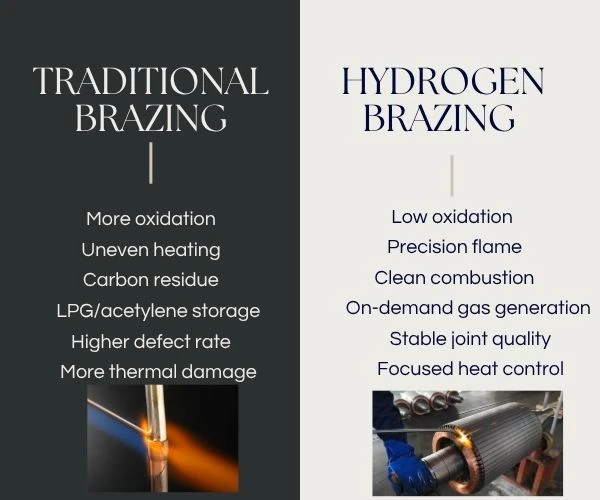
The recent technological changes in modern industrial brazing are the introduction of the hydrogen brazing process technology. Brasers on hydrogen are gaining interest due to their capability to offer a more manageable and cleaner flame than the conventional hydrocarbon fueled ones.
Oxyhydrogen flame technology is an electrolysis technique used to produce hydrogen and oxygen, which achieve a high-temperature focused flame without much contamination. Combustion is the main source of water vapor, thus, oxidation is decreased considerably during brazing. This more environmentally clean heating leads to better protection of copper surfaces and enhanced metallurgical bonding.
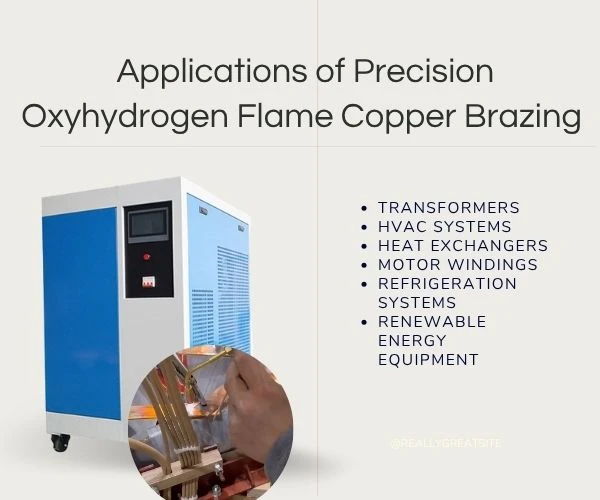
Hot gas hydrogen generator brazing is particularly useful in transformer coils, HVAC systems, motor windings, and electrical assemblies where the characteristic of conductivity and integrity of the joints is vital. Hydrogen based brazing can also be used to reduce oxidation and carbon residue, which supports manufacturers seeing more dependable copper connections at a reduced rate of defects.
Hydrogen brazing technologies are also becoming more popular in high-volume manufacturing industries due to its ability to sustain a stable flame performance and repeatable heating conditions. The emerging trends of clean flame making technologies make up significant contributions to the current industrial assembly procedures as production lines are increasingly automated and quality-oriented.
Stability of the flames and localization of heat is crucial in accuracy industrial manufacturing. Over or under heating may ruin insulation material, early degeneration of copper device, or cause irregular filler metal flow. This especially poses a problem in small electrical systems with tightly laid out components.
However, in the current market, precision heat control is gaining more importance as manufacturers begin to focus on minimizing thermal stress and enhancing the consistency of the brazing process. Localized heating enables one to put thermal energy on the part of the joint and the affected area around the adjacent parts is reduced to a minimal. This enhances precision of production and minimizes chances of a defect.
The hottest system of flame is not necessarily the best torch for brazing copper. Rather, it is a system that can provide steady, focused, and controlled heat that can be utilized in more fined industrial processes. Modern copper brazing torch systems that are oxyhydrogen based offer more accuracy in flames than most traditional fuel-fed systems.
The importance of this level of control is particularly when producing brazing copper to copper joints in transformer coils used in high-performance, inside refrigeration tubing, and electrical connectors. Precision flame chemistry contributes to enhance filler penetration, joint strength, and long-term reliability, and decreases failures occurring due to oxidation.
With the increasing production system upgrade by manufacturers, many withhold the question of which is the best technology to suit their working needs, taking a look at the two, actually, vacuum brazing vs hydrogen brazing options. These two methods have their merits though their application depends on the scale of production, flexibility and cost factors.
Vacuum brazing offers a great control of oxidation because the joining operation is carried out in a vacuum. The technique is very suitable in special aerospace and high-precision performance. Nonetheless, vacuum systems can be costly, batch-processing and more complicated equipment infrastructure.
By contrast, the hydrogen brazing process systems are more flexible to the continuous industrial production settings. Oxyhydrogen can also be directly incorporated into production lines, helping expedite throughput and more flexible production processes. This renders hydrogen brazing appealing to industries which would need a mass production efficiency.
Scalability is another significant benefit. Hydrogen brazing systems can be used in transformer manufacturing, refrigeration equipment, motor winding production and other industrialized goods where high-volume copper welding with a stable quality must be achieved. Hydrogen-based brazing can be a practical alternative to vacuum systems with respect to precision, flexibility in its operations, and cost of production.
With the further modernization of manufacturing processes by industries, the use of oxy hydrogen brazing systems is becoming a key provide solution in the future. Industries such as Ptxson offer high level oxyhydrogen flame technology that is centered on joining copper in industries.
Such hydrogen generator brazing systems use water electrolysis to generate hydrogen and oxygen on-demand without oil storage, as is possible with traditional systems. The resultant hydrogen-oxygen combustion provides constant burning, focused heating and lesser oxidation during the operation process of brazing.
They are used especially in the transformer manufacturing, the manufacture of motor winding, manufacture of heat exchanger and the manufacture of electrical equipment where precision and reliability is most essential. Constant flame operation helps in maintaining a reproducible quality in brazing and minimizing the chances of thermal damage and contamination.
The other benefit of oxyhydrogen technology is that it can be used in automated manufacturing environments. Due to the growing relocation of industrial production to the smart manufacturing and robotic assembly designs, technologies of clean and manageable flames are being demanded. Innovative technology such as copper winding joining technology with the aid of oxyhydrogen enables manufacturers to enhance quality consistency and make the production more efficient.
The energy revolution in the world is causing significant transformations in the industrial production. With the shift of industries to the electrification, renewable energy systems, and energy-saving technologies, the requirements of products in terms of reliability and accuracy also increase.
Quality of copper joining has gained special consideration as it directly influences the electrical conductivity, thermal performance and long-term system durability. Conventional technologies of joining are failing to comply with the requirements of modern compact, high-performance equipment, compelling manufacturers seek more eco-friendly and sophisticated options.
Modern-day copper joining methods are becoming inevitable in the creation of stable transformers, HVAC systems, refrigeration equipment and industrial electrical infrastructure. Hydrogen technologies have valuable benefits such as increased resistance to oxidation, ability to maintain flame stability, clean combustion, and better control over the process.
With the growing variety of sustainable manufacturing, the systems of hydrogen brazing processes will assume a more significant role in industrial production in the future. Their capability of supporting cleaner, more focused, and more efficient brazing copper to copper applications makes them a useful technology in the next-generation manufacturing of energy infrastructure.