As environmental laws tighten and fuel prices keep climbing, industries around the world are keen on finding a more eco-friendly and sustainable form of energy. The traditional fossil-fuel-based heating systems are facing increasing pressure as a result of carbon-emissions, fuel inefficiency and short- and long-term sustainability concerns. Consequently, a number of manufacturers are considering alternative energy sources that are environmentally friendly, yet don’t hinder industrial productivity.
Green Hydrogen is growing as one of the fastest solutions. The debate on how to produce hydrogen from solar energy has grown considerably since the technologies of renewables are now making the concept of hydrogen production using solar energy more feasible for industrial-scale applications. In the context of industrial energy transitions, green hydrogen is increasingly being discussed as one option for the future, not least in boiler systems where massive amounts of thermal energy are needed.
Low-emission boiler technologies are increasing and spurring factories and manufacturing facilities to conduct studies on hydrogen-fuelled combustion systems. At present, modern MESS (modern methods of energy provision) embarking on the path of hydrogen-powered heating systems and oxyhydrogen combustion technologies are entering into modern energy provision.
The solar powered hydrogen generation system is developed by introducing a combination of renewable solar energy and water electrolysis. The solar energy is collected by solar panels and converted to electrical power and then stored in electrolysers. This will cause the water molecules to break apart into hydrogen and oxygen gases.
As compared to conventional Hydrogen production processes based on use of fossil fuels, Solar Based Hydrogen production process is regarded as a cleaner Hydrogen production process. With the objective of long-term sustainability using renewable hydrogen systems and transition away from traditional fuel systems, there is a growing interest in how solar energy can be used to create hydrogen.
The alkaline electrolysis process is still one of the most popular and reliable technology to obtain hydrogen from solar energy. The alkaline electrolyzer is a system that separates water into hydrogen and oxygen by directly and electrolyzing them with the power generated by solar panels and a alkaline electrolyte solution. This technology is appreciated for reliability, cost-effectiveness, and capability with continuous operation in industrial applications. Alkaline electrolysis is an emerging technology in hydrogen production, as modern alkaline electrolyzers are efficient enough to produce hydrogen where and when it is needed, and can be used in a wide range of applications including metal brazing and welding, various forms of industrial heating, and clean energy generation. Alkaline electrolysis is a promising method for sustainable and low carbon hydrogen production when coupled with solar energy.
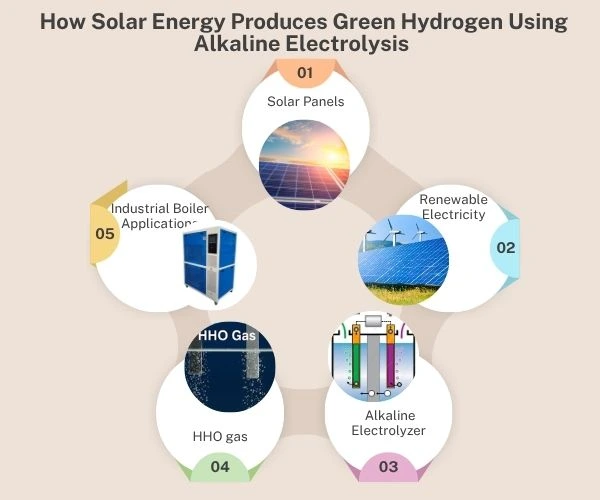
Solar powered hydrogen is produced in industrial scale generator systems and now becoming installed in manufacturing plants, industrial heating facilities and boiler support systems. These systems enable companies to integrate renewable energy sources into a combination of hydrogen gas combustion systems to enhance industrial operations with cleaner technology.
The production of solar hydrogen continues to grow all over the world, and it now features prominently in industry decarbonization debates.
Hydrogen combustion reaction is one of the many aspects responsible for the increasing interest on hydrogen as a fuel source for industry. The combustion of hydrogen gas with oxygen produces primarily water vapor and not emissions rich in carbon. This is a form of cleaner burning that is gaining traction among those industries looking for reduction in emissions with their heating technology.
Hydrogen gas combustion has also good flammability and heat transfer properties. The above properties have made hydrogen applicable in industrial systems using boilers where stability of the thermal performance and quick response to energy demand are critical.
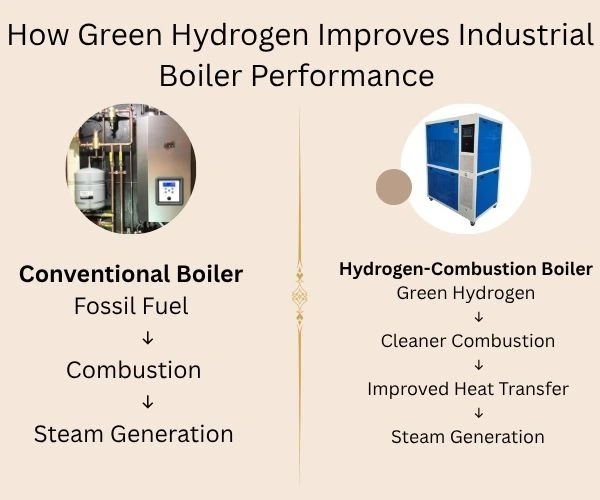
In industrial applications, combustion reaction systems for hydrogen combustion can be incorporated in boilers for fuel combustion in a more efficient and cleaner manner. Hydrogen technologies support heating could lead to a decrease in soot, smoke, and carbon deposits in industrial boilers when compared to conventional combustion technologies.
Another interesting relationship is between hydrogen gas combustion and industries looking into ways of producing hydrogen using solar energy – the issues being examined are also those of operating sustainability and enhanced performance for industrial heating systems.
The new generation of oxyhydrogen HHO boiler technologies are developed to enhance the quality of combustion inside industrially used heating systems. Oxyhydrogen gas will contain both hydrogen and oxygen, when the gas is introduced into the boiler during operation, it will create an environment in which combustion will be more complete.
Hydrogen and Oxygen gases are fed into combustion chamber of an oxyhydrogen HHO for boiler system to facilitate combustion of fuel and thermal efficiency. The process can assist in cleaner combustion in, and better heat transfer performance within, industrial boilers.
The enhanced efficiency of boilers is one of the most significant benefits of oxyhydrogen systems. Combustion can improve efficiency, resulting in less incomplete combustion or smoke production and limit accumulation inside burner systems. Better combustion chambers can also contribute to smoother conduct of the boiler over time, while reducing over time repair needs.
In industries taking care of massive steam boilers, they take a look at methods that boost the efficiency of the boiler and also help the fuel-to-Conservation target. In the manufacturing environment, where the thermal energy demand is still high, the application of oxyhydrogen HHO for boiler use has been studied.
The rising relevance of hydrogen gas combustion technologies can also be attributed to the increased sustainability focus on industries and energy optimisation.
PTXSON is developing state of the art oxyhydrogen generator technologies for industrial boiler enhancement for combustion and cleaner thermal processing applications.PTXSON oxyhydrogen systems were utilized in various factories and industrial plants that are seeking to improve the combustion quality and to keep more efficiently their boilers running.
How to produce hydrogen from solar energy? The introduction of the gas generators which produce gases of hydrogen and oxygen in the application enables the better stabilisation of the combustion behaviour in industrial heating systems. These systems are becoming talked about in industry as they consider the technology to be converted into hydrogen using the energy potential of the sun and implementing hydrogen-supported combustion technologies in factory processes.
The oxyhydrogen HHO for boiler technologies developed by the company can be used in different industrial boiler applications, including steam boilers, thermal processing plants and energy intensive manufacturing plants. In addition, PTXSON systems can be used to provide cleaner burners operation and higher combustion efficiency.
Adopting hydrogen gas combustion is a component strategy within the overall industrial energy transition efforts being pursued by industries around the world, especially in Asia, Europe, Middle East and North America. PTXSON is still providing these advanced technologies in the field of hydrogen combustion and the optimization of industrial boilers.
Factories are interested in hydrogen gas combustion technologies as a source of cleaner industry heat. A key advantage is that the amount of industrial emissions is less than from traditional fuel combustion systems.
Another benefit is the cleaner and better operating characteristics of burners when hydrogen is being burned. Improved hydrogen combustion reaction performance and conditions, such as may be obtained with the cleaner-combustion device, may lead to a reduction in sootiness accumulated in industrial boilers and heating devices and in smoke formation and carbon deposits, and in smoke and carbon deposits formed in the combustion domains.
One more significant benefit is enhanced warmth of boiler efficiency. Improved combustion may result in improved thermal transfer, more stable burner conditions and improved fuel utilization in industrial heating applications.
Another area of interest for factories is using hydrogen to supplement combustion systems for sustainable processes. With growing attention on carbon emissions reduction by governments and industries, hydrogen gas combustion is coming into the spotlight for industrial decarbonization.
Solar energy also plays a supporting role in regard to the use of renewable energies by linking industrial heat production processes to sustainable hydrogen production technologies and renewable energy sources.
The installation of solar powered hydrogen generator systems and oxyhydrogen HHO technologies are now in popular use in many industries for application in the heating field and to achieve a cleaner production environment.
There are many textile and garment manufacturing facilities that need big steam boiler systems to dye, wash and process fabrics. Combustion systems that can be operated using hydrogen can enhance thermal efficiency and minimize emissions.
Industrial boilers are also widely used for cooking, sterilizing and cleaning processes at food processing industries, as well as for food packaging. Given that food manufacturers are working towards more sustainable production practices and cleaner combustion technologies are becoming crucial.
Thermal processing systems in chemical manufacturing plants are required to have a stable high-temperature heat output. Combustion of hydrogen gas is more and more being considered as energy optimization in industrial energy production technologies.
Research for the production or use of renewable hydrogen in industrial processes is now underway at steam boiler plants and / or thermal processing plants, in several industries.
Oxyhydrogen HHO for boiler have continued to expand in use as factories look to reduce pollution and improve efficiency when they are heating their industrial equipment.
How to produce hydrogen from solar energy? Industrial heating will feature more introduction of renewables based hydrogen technologies in the future. More and more, governments, business and industry and energy companies are investing in hydrogen infrastructure in order to enable less polluting energy systems in industry.
On the path of future energy development in the industrial sector, solar powered hydrogen generator technologies are likely to be a key contributor. The cost of renewable electricity is on the steady decline and hydrogen production with said electricity might be even more available to factories and manufacturing facilities around the globe.
Besides that, smart hydrogen combustion systems are also being developed for the further enhancement of industrial automation, combustion monitoring and energy optimization. These technologies could have a role to play in making the industry in boiler efficiency, as well as in minimizing waste use and emissions during operation.
This would continue to spur interest in combustion reaction technologies for hydrogen in the future, alongside the investment in hydrogen fuel cells.This would also fuel the interest in hydrogen combustion reaction technology in the future along with investment in hydrogen fuel cells. Hydrogen assisted boilers are being looked at by manufacturers as a more environmentally friendly solution for their heating needs and have been gaining traction in long-term sustainability planning.
The growing attention on solar power production for hydrogen will continue to increase as industries seek alternative fuel supplies that don’t pollute the environment. Combustion of hydrogen or oxyhydrogen using renewable fuel is emerging as a viable option for more sustainable industrial heating and today’s boiler processes.