Hydrogen water has become a fast-growing product, especially within the wellness-conscious consumer market as a readily available source to assist with hydration and daily functioning. Whether you’re using portable hydrogen water devices in the gym, at work, in the car, or as part of a biohacking community, people have taken to this water source more than ever before and are embracing the use of portable hydrogen water systems as a healthy way of life. But at the same time many are experiencing a problem: a strange smell in the hydrogen water bottles like chlorine or an ozone, and many are calling it out.
This may lead to confusion, especially if it’s the buyer’s first time purchasing a house. This isn’t the case: many consumers expect all products with hydrogen water to function in the same manner. Hence, the quality of hydrogen generation technology has a significant influence on the experience of drinking hydrogen, either positive or negative, and whether it tastes clean and refreshing or offensive and chemically-contaminated. This is one of the reasons why the “which hydrogen water bottle doesen’t smell like ozone” question isn’t off the table when it comes to considering consumer hydrogen water bottles. But in some cases, this problem goes back to the design itself of a cheap hydrogen water bottle, not the water made from hydrogen.
The first step to understand is to spend some time learning about how hydrogen-rich water is produced by electrolysis, which gives an understanding of why there may be odors present in some hydrogen bottles. Most hydrogen bottles operate using a process of electrically breaking water down into hydrogen and oxygen molecules. Ideally the system has to produce clean molecular hydrogen and not allow the unwanted gases to get in the drinking chamber.
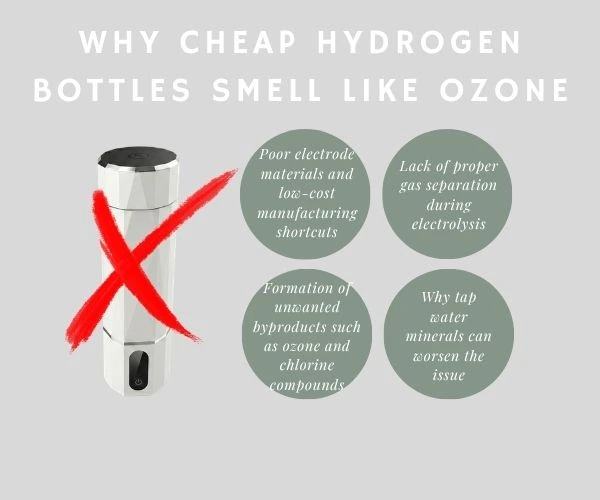
Problems arise when the gases are not separated sufficiently in low quality electrolysis systems when they are in operation. If designed inferiorly, an electrode structure and the instability in membrane designs can accidentally generate ozone, chlorine-like compounds or other unwanted byproducts. One of the major reasons why cheap electrolysis creates ozone/chlorine.
Water quality also has impacts on performance. But the minerals, chlorine, impurities in the water may act differently under electrolysis conditions, if no separation technology is provided. What is more, low grade electrode coating might deteriorate over the years, which consequently results in volatile hydrogen generation and stripped down smells. Therefore, the efficiency of the hydrogen bottle generator technology electrolysis plays a crucial role in protecting users and ensuring the quality of drinking water.
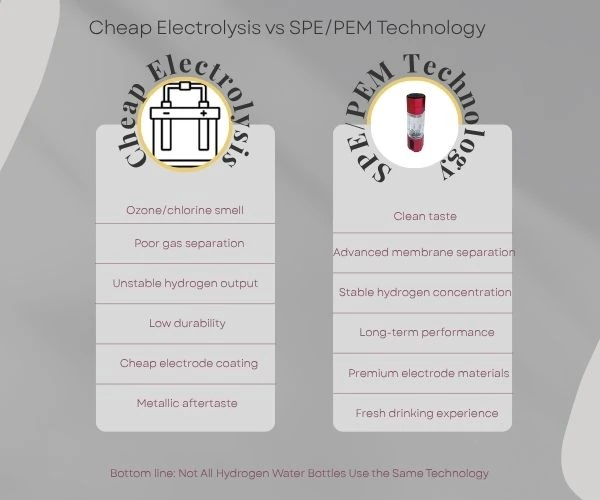
All hydrogen water equipment technologies are not the same. Many low cost products are based on simple electrolysis systems which focus on making the product as cheap as possible. Byproducts are not well controlled in the process making these systems difficult to operate, sometimes having a direct impact on the taste and odor and overall system longevity.
Advanced systems have a methodology that involves methods to more effectively separate hydrogen and oxygen through the electrolysis process. Difference Between Cheap Electrolysis and SPE/PEM technology approaches are a part of them. SPE (Solid Polymer Electrolyte) and PEM (Proton Exchange Membrane) technology forms a physical barrier which prevents unwanted gases from mixing with drinking water but allows the passage of hydrogen.
That is the reason why the low cost products generally create dirty (highly acidic) hydrogen water with enormous amounts of unpleasant odors, whereas a spe pem hydrogen water bottle produces cleaner hydrogen water with much less of those unpleasant odors. Not only the odour of ozone is decreased due to the enhanced membrane separation, but also aspects of the more stable hydrogen concentration level are preserved. The greater the uptake of consumers, the greater the awareness that purity of electrolysis is important as much as the concentration of hydrogen is.
The biggest problem with a low-cost hydrogen water bottle is the quality of its production. Lots of really cheap products emphasise promotion of their features and produce skimpy internal components and electrolysis chamber form.
If electrode material has poor performance quality, it can corrode or decompose during repeated use, which leads to poor electrolysis performance. Imperfect sealing of the chamber may cause undesirable gases to be directly introduced in a drinking water source. Consequently, the users can experience a disagreeable odor, integrated taste of metals, irregular hydrogen production or instability in the production during time.
The durability is also a problem. These are often simple circuits and poor batteries and their performance isn’t sustained over long periods of use. Why cheap electrolysis creates ozone/chlorine is closely related to bad engineering and inadequate gas separation and leads to frustrating results rather than an upscale hydration experience.
Hydrogen concentration numbers are often the only focus on consumers and they neglect of the quality supplied by the electrolysis process. In fact, hydrogen generation with low quality can lead to poor user experience and failure in the wellness products’ trustworthiness.
If the consumer wishes to buy hydrogen water experiences that are cleaner and safer, there are some important factors they need to consider. Knowing How to Identify an Ozone-Free Hydrogen Bottle can prevent problems in buying a product of quality.
An initial equation to evaluate is whether the product has a SPE/PEM membrane technology. This is one of the most effective ways to tell that the bottle will be used to correctly separate hydrogen and oxygen during electrolysis. The products with advanced membrane system generally have higher reliability, and generate clean hydrogen water, which is less odorous.
Consumers should also check the materials’ quality. Using food grade construction materials, using sealed electrolysis chambers, and having a stable coating on the electrodes all help in these aspects and lead to better long-term performance. You can find detailed technical information, certifications, and hydrogen concentration testing information from reliable manufacturers.
Finding the best hydrogen water bottle is not just a marketing trick, it’s how hydrogen is generated that’s ordinarily the sign of quality. Building a good bottles requires that it should give a fresh and inoffensive taste without being used every day, and should not have a chemical odour or sting.
With the rise of awareness among consumers, the attention towards simple hydrogen concentration marketing has been placed more towards the quality of electrolysis and the taste of drinking it. It is referring to a wider knowledge that to achieve comfortable use, the production of clean hydrogen is vital.
Evolution hydrogen bottle generator technology is based on advanced systems, where the hydrogen purity is optimized and unwanted by-products are reduced. Now it’s about developing a process for hydrogen generation that is more stable and refined, rather than just increasing the amount of gas produced.
New developments with SPE/PEM separation technology offer several benefits to consumers eager to enjoy a better every-day wellness experience. A spe pem hydrogen water bottle can contribute to decrease in odours, and stable hydrogen concentration output. This makes the water more palatable and safe to use as a substitute to normal drinking water.
Before the appearance of an eco-friendly Ozone Formation System, people used to complain about its poor use of electricity, rough working mechanism and non-stable performance with lower price, but with the launching of UPE, the user is advised to pay attention to the stability of the hydrogen bottle generator technology electrolysis, the quality of the membrane, and the overall use atmosphere when using the best hydrogen water bottle for daily use.
There is significant information about the number of ppm (parts per million) of hydrogen in the water added to the marketing of hydrogen water, but it is by no means enough to ensure the quality of the product. While promotional specifications are important, it is necessary to consider the whole electrolysis system made up of the evaporator, the tank, and the evaporator control unit, as well as the output and performance.
The next big question, what doesn’t smell like ozone? The answer is obvious, certain cheap hydrogen water bottle. This answer is most often contingent upon the system employing a modified gas separation and stable electrolysis design, instead of low cost clever engineering.
Which hydrogen water bottle doesen’t smell like ozone:
You can find them in the user reviews section, where users willRate them for their odor or taste.
It’s important to understand that while an inexpensive hydrogen water bottle might seem like a tempting purchase because of the low cost, you’ll end up getting frustrated in the long run with poor performance. Learning about How to Identify an Ozone-Free Hydrogen Bottle enables consumers to make informed and informed choices on the long term basis regarding safe, stable and convenient purchase of hydrogen bottles rather than short term marketing frenzy.
Hydrogen water products are increasingly popular and well-known, leading people to understand how key the quality of electrolysis is and the hydrogen’s purity. Ozone or chlorine instead is a strong sign of a poorer quality electrolysis system that is not very efficient of gas separation ability.
Advanced SPE/PEM technology provides a more sophisticated way of processing because it helps to minimize unwanted by-products and facilitates cleaning of hydrogen production. When it comes to enjoying a tastier product, greater reliability and safer daily hydration, a well-designed system is gaining importance for consumers.
When buyers are comparing products on offer, they should avoid those that focus on marketing statements and price alone; a product that leverages membrane technology, provides a stable hydrogen generation and experience is crucial. It’s hard not to come down with a single conclusion: the ideal spe pem hydrogen water bottle is reliable in terms of providing clean and smell-free tints of water throughout long usage.
As more and more consumers inquire about which hydrogen water bottle doesen’t smell like ozone, they are learning that the best hydrogen water bottle deliver a much clean and dependable hydrogen water experience to today’s wellness way of life.